Powers of the False: How Falsifying Narration Creates Truth
Analyzing how narration changes the world through the crisis of truth, the series of falsifiers, and the criterion of creation
Concept relation
- 01Several versions contest the position of truth→
- 02The tribunal is drawn into the next version→
- 03Identity and world change with each telling→
- 04Creative capacity differentiates powers
Time places the fixed model of truth in crisis. Falsifying narration organizes expert, witness, liar, author, and camera as a series of falsifiers; each position passes authority onward and changes the world it describes. The series becomes affirmative by creating new relations, values, and possibilities of life.
Cinema 2 chapter 6 directly discusses F for Fake, The Man Who Lies, and The Immortal Story. This atlas uses Mulholland Drive as a contemporary test.
Primary coordinates
DELEUZE PRIMARY TEXTthe power of the false
FACT → RELATION → TEST
Time places the model of truth in crisis
Undecidable pasts and inexplicable presents remove the external center that calibrates every version.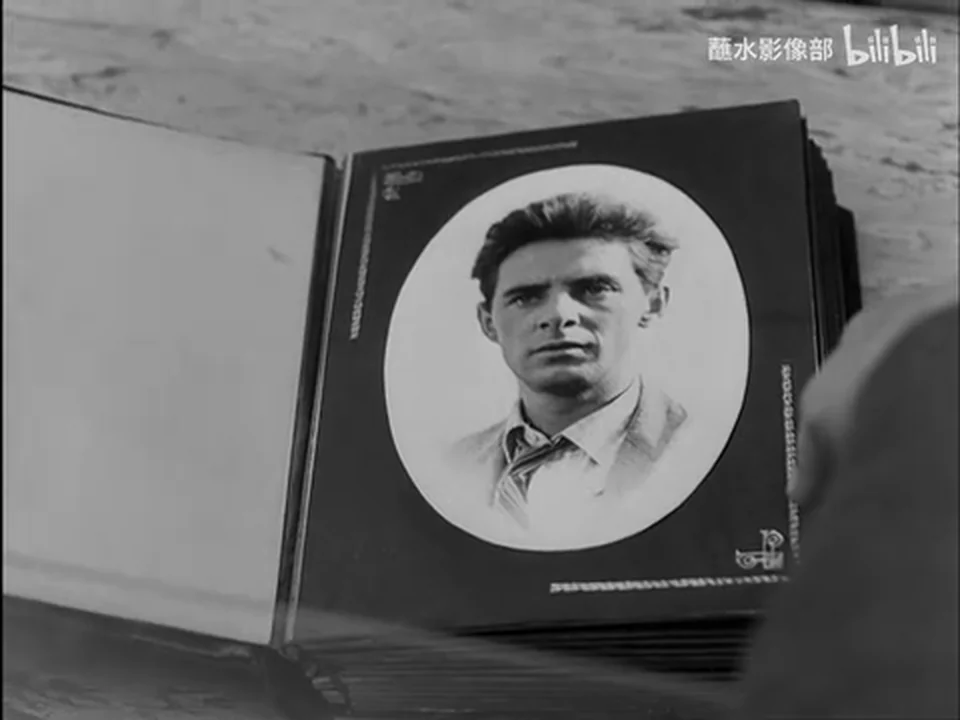 00:00:55
The face first appears as a dossier photograph, then as a moving body, then as another printed portrait; montage repeatedly reassigns identity.
An open dossier shows a frontal portrait, followed by a moving close-up of the same actor and another tilted printed portrait.
The audio is very low in this window and the upload has no platform subtitle track; the claim rests on the visible alternation, not dialogue.
SITE ANALYSISThe dossier does not stabilize the figure; it becomes one version in the figure's ongoing transformation. No final center authenticates photograph, body, and the next photograph.
Cinema 2, chapter 6, English translation pp. 131–133; atlas formal analysis of this edited window.Bilibili at 00:00:55 Open original still ↗Edited-upload timeline, frame-verified to within one second.A 4:18 edit of original-film images, not a continuous complete feature; film identity and anonymous playback were frame-verified, and the timecode refers only to this upload.
Bilibili edited original-film excerpt · 蘸水影像部 · verified 2026-08-14The narrator of The Man Who Lies changes continuously among hero, traitor, witness, and impostor. Every telling rewrites his past and present relations, while the film supplies no narrative center capable of fixing all identities.[2, pp. 131–133][5, pp. 147–163]
Truth and falsity are no longer reordered by a final answer; they are produced through relay, substitution, and metamorphosis among versions. Telling does not conceal a complete fact but becomes a temporal force through which the event continues.[2, pp. 126–136][3, 12 June 1984 English transcript, pp. 22–23]
FACT → RELATION → TEST
Falsifiers form a series of powers
Expert, witness, forger, author, and camera alternately acquire and lose authority.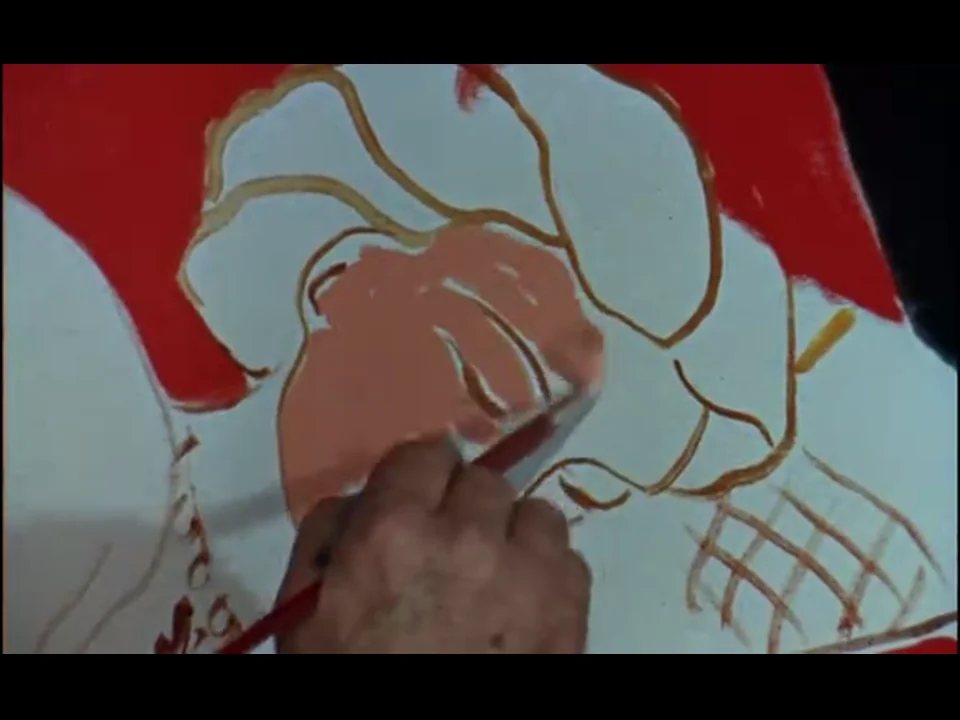 00:25:30
The act of imitation does not finish the authentication chain. Experts, museums, and dealers determine under whose name the image circulates.
Close shots follow hand and brush tracing lines, then cut among Elmyr, reproductions, and the studio.
The passage places fabrication, the artist's face, and publishable reproductions in the same chain.
Elmyr says that to resemble Matisse he must deliberately make his line appear hesitant.
He then challenges experts, museum directors, and dealers to distinguish the works.
SITE ANALYSISAuthenticity is no longer settled inside the image. The painter imitates style, experts assign names, institutions price the object, and Welles's editing rewrites every authority; authentication keeps moving through the series.
Cinema 2, chapter 6, English translation p. 150; atlas shot analysis.Bilibili at 00:25:30 Open original still ↗Bilibili single-part media timeline, frame-verified to within one second.Complete single-part film; title, year, 1:28:46 runtime, and anonymous playback were verified. Bilibili submission label: repost.
Bilibili full-film upload · 发呆的海绵宝宝 · verified 2026-08-14F for Fake lets Elmyr forge paintings, Irving write a false biography, Hughes govern authentication through doubles and absence, and the art market produce value. Welles rearranges the material through editing and conjuring; filmmaker and film enter the series they present.[2, pp. 145–146][3, 22 November 1983 English transcript, p. 15]
Bogue emphasizes the relay structure of falsifiers: every position of authentication changes in the next transfer. Analysis moves from who tells the truth to what bodies, relations, and values each power produces.[5, pp. 147–163]
FACT → RELATION → TEST
Creation supplies the affirmative criterion
Falsifying narration reaches its highest power by generating new relations and changing the conditions of subsequent telling.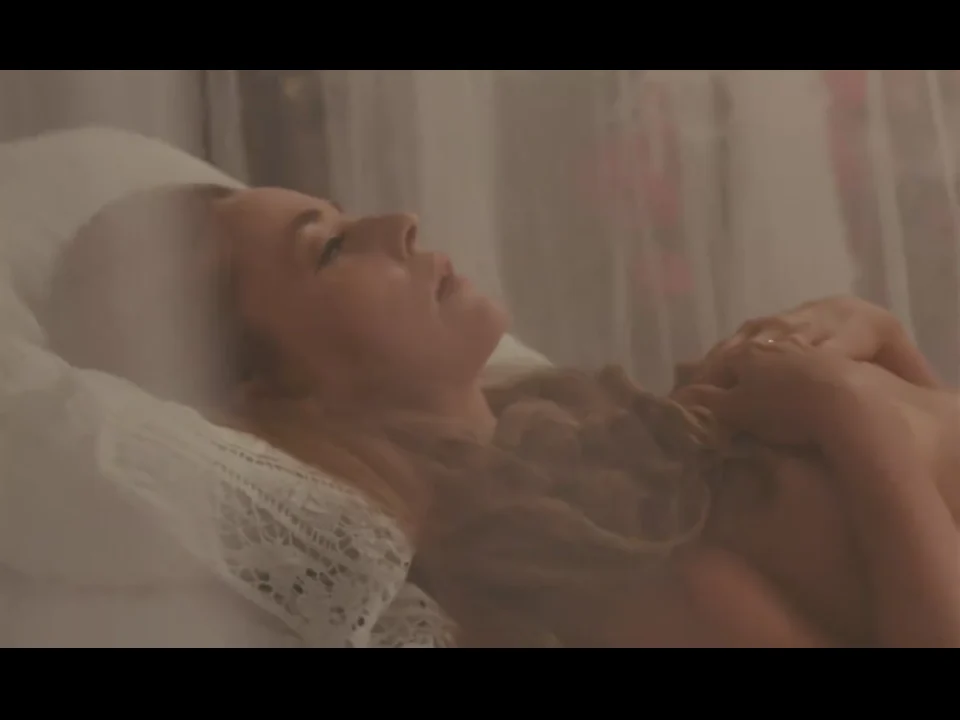 00:40:00
Clay's arranged story has occurred, yet the two hired performers form a relation beyond the commission.
The sailor and Virginie lie side by side beneath the canopy; neither Clay nor his secretary is in the frame.
The translucent fabric isolates the commissioned enactment as an autonomous enclosed space.
Clay's immediate instructions have left the sound field; quiet voices and pauses remain between the two hired performers.
SITE ANALYSISClay tries to make the legend obey a prior model, but the hired performers produce a new relation in carrying it out; fiction shifts from copying an old story to making a consequence its arranger cannot reclaim.
Cinema 2, chapter 4, p. 76; chapter 6, pp. 126–155.Bilibili at 00:40:00 Open original still ↗Frame-checked within the canopied-bed passage in which the hired performers enact the tale.Complete Bilibili carrier; the shot at 单片 00:40:00 was checked frame by frame, and the still and timestamp come from the same public upload.
Bilibili · The Immortal Story complete film · verified 2026-08-14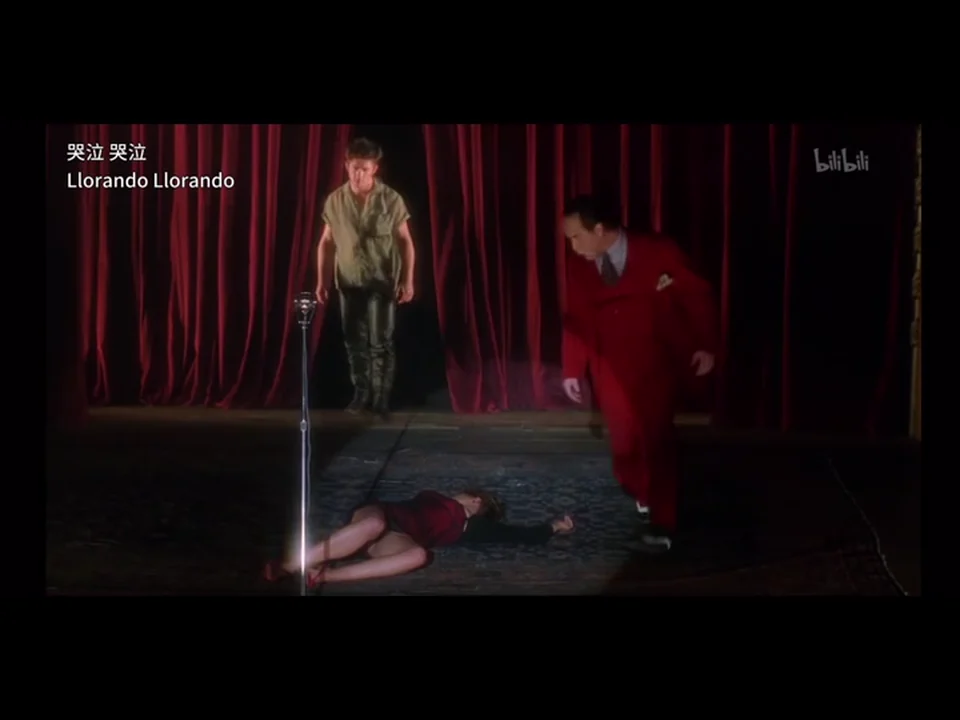 00:07:07
After the singer collapses, Llorando does not stop. The visible body loses its claim as source and the recording takes over the event.
The singer collapses beside the microphone; stagehands enter and carry her away while curtain and microphone remain.
Betty and Rita cry in the audience as the image alternates between stage and spectators.
The Spanish vocal continues for roughly twenty seconds after the singer collapses and is carried away, without breaking with her bodily action.
SITE ANALYSISLive performance and prerecorded voice first appear as one event; the collapse separates them. Their exchange removes the visible body's monopoly on reality and resets the evidentiary rules for the later identity shift.
Cinema 2, chapters 4 and 6; atlas shot analysis of the Club Silencio passage.Bilibili at 00:07:07 Open original still ↗Excerpt-upload timeline, frame- and audio-verified to within one second.A continuous 7:58 Club Silencio excerpt, not the complete feature; film identity, continuity, and anonymous playback were frame-verified. Bilibili submission label: repost.
Bilibili continuous original-film excerpt · MC天轩 · verified 2026-08-14On page 76 of Cinema 2, Deleuze distinguishes two operations of the legend in The Immortal Story: it reflects a story arranged for reenactment and also becomes a seed through which the legend germinates again. This coordinate belongs to chapter 4's analysis of the crystal and does not by itself prove the powers of the false.[1, p. 76]
The atlas reads page 76's mirror/seed distinction together with page 149's indication that the film matters to the transformation of truthful narration. Mr Clay stages the maritime legend, yet the hired figures form a relation beyond the commission and the story circulates beyond its arranger. Calling this a passage from model to generative force is the atlas's bridge between two primary coordinates, not a complete conclusion stated by Deleuze on either page.[1, p. 76][2, p. 149]
Across the blue-box transition in Mulholland Drive, names, roles, desires, and causal positions rewrite one another. Analysis records who defines reality, what object switches versions, and how the later movement changes the earlier one's evidentiary status; reciprocal transformation gives falsifying narration a contemporary form.[5, pp. 147–163]
Film comparisons
F for Fake
Authentication keeps movingForger, biographer, market, and filmmaker alternately authenticate and undo one another.
Deleuze discusses this film directly here · pp. 145–14600:25:30The act of imitation does not finish the authentication chain. Experts, museums, and dealers determine under whose name the image circulates.
Close shots follow hand and brush tracing lines, then cut among Elmyr, reproductions, and the studio.
The passage places fabrication, the artist's face, and publishable reproductions in the same chain.
Elmyr says that to resemble Matisse he must deliberately make his line appear hesitant.
He then challenges experts, museum directors, and dealers to distinguish the works.
SITE ANALYSISAuthenticity is no longer settled inside the image. The painter imitates style, experts assign names, institutions price the object, and Welles's editing rewrites every authority; authentication keeps moving through the series.
Cinema 2, chapter 6, English translation p. 150; atlas shot analysis.Bilibili at 00:25:30 Open original still ↗Bilibili single-part media timeline, frame-verified to within one second.Complete single-part film; title, year, 1:28:46 runtime, and anonymous playback were verified. Bilibili submission label: repost.
Bilibili full-film upload · 发呆的海绵宝宝 · verified 2026-08-14The Man Who Lies
Identity changes with tellingHero, traitor, witness, and impostor lack a fixed narrative center.
Deleuze discusses this film directly here · pp. 131–13300:00:55The face first appears as a dossier photograph, then as a moving body, then as another printed portrait; montage repeatedly reassigns identity.
An open dossier shows a frontal portrait, followed by a moving close-up of the same actor and another tilted printed portrait.
The audio is very low in this window and the upload has no platform subtitle track; the claim rests on the visible alternation, not dialogue.
SITE ANALYSISThe dossier does not stabilize the figure; it becomes one version in the figure's ongoing transformation. No final center authenticates photograph, body, and the next photograph.
Cinema 2, chapter 6, English translation pp. 131–133; atlas formal analysis of this edited window.Bilibili at 00:00:55 Open original still ↗Edited-upload timeline, frame-verified to within one second.A 4:18 edit of original-film images, not a continuous complete feature; film identity and anonymous playback were frame-verified, and the timecode refers only to this upload.
Bilibili edited original-film excerpt · 蘸水影像部 · verified 2026-08-14The Immortal Story
The story escapes its arrangerThe atlas reads together two primary coordinates of different weight: page 76 closely analyzes the legend's mirror/seed operation, while page 149 only briefly includes the film in the transformation of truthful narration. That the staged legend produces a new relation and re-enters circulation is the atlas's bridge between them.
Deleuze discusses this film directly here · p. 76Deleuze briefly mentions this film here · p. 14900:40:00Clay's arranged story has occurred, yet the two hired performers form a relation beyond the commission.
The sailor and Virginie lie side by side beneath the canopy; neither Clay nor his secretary is in the frame.
The translucent fabric isolates the commissioned enactment as an autonomous enclosed space.
Clay's immediate instructions have left the sound field; quiet voices and pauses remain between the two hired performers.
SITE ANALYSISClay tries to make the legend obey a prior model, but the hired performers produce a new relation in carrying it out; fiction shifts from copying an old story to making a consequence its arranger cannot reclaim.
Cinema 2, chapter 4, p. 76; chapter 6, pp. 126–155.Bilibili at 00:40:00 Open original still ↗Frame-checked within the canopied-bed passage in which the hired performers enact the tale.Complete Bilibili carrier; the shot at 单片 00:40:00 was checked frame by frame, and the still and timestamp come from the same public upload.
Bilibili · The Immortal Story complete film · verified 2026-08-14Mulholland Drive
Two worlds rewrite evidenceIdentity, desire, and causality on both sides of the blue box change one another's status.
00:07:07After the singer collapses, Llorando does not stop. The visible body loses its claim as source and the recording takes over the event.
The singer collapses beside the microphone; stagehands enter and carry her away while curtain and microphone remain.
Betty and Rita cry in the audience as the image alternates between stage and spectators.
The Spanish vocal continues for roughly twenty seconds after the singer collapses and is carried away, without breaking with her bodily action.
SITE ANALYSISLive performance and prerecorded voice first appear as one event; the collapse separates them. Their exchange removes the visible body's monopoly on reality and resets the evidentiary rules for the later identity shift.
Cinema 2, chapters 4 and 6; atlas shot analysis of the Club Silencio passage.Bilibili at 00:07:07 Open original still ↗Excerpt-upload timeline, frame- and audio-verified to within one second.A continuous 7:58 Club Silencio excerpt, not the complete feature; film identity, continuity, and anonymous playback were frame-verified. Bilibili submission label: repost.
Bilibili continuous original-film excerpt · MC天轩 · verified 2026-08-14Put the claim back into more films
These films are not a list of examples but pressure tests: when the same concept meets different spaces, bodies, sounds, and narrations, which relations still hold and which must be withdrawn?
Who still holds the tribunal of truth?
From Welles's experts and forgers to reenactment and testimony, track how versions change who can be believed instead of searching for a final truth.
F for Fake
The tribunal passes among expert, forger, and filmmaker
Artist, authenticator, forger, and filmmaker alternately establish and undo one another's authority. The film does not search for a final custodian of truth; each telling changes the conditions of the next, making falsification a power of becoming.
00:25:30- CONCEPT MOVE
- The true/false tribunal becomes a transfer of authority among versions.
- SHOT EVIDENCE
- List each speaker's version, authentication act, and editing position; observe how the next version changes the previous one's credibility.
- BOUNDARY
- Exposing a scam is not yet the power of the false; if the film restores an unshakable tribunal, the chain is closed again.
Cinema 2, ch. 6, pp. 145–146
LOCATORSequences of authentication, forgery, and the filmmaker's intervention
The Man Who Lies
Each telling transforms liar, character, and world
The film does not treat lying as a veil over an existing fact. With each variation, narrator, character, and world change. Falsification is not a mistaken version but a force that makes new relations appear.
00:00:55- CONCEPT MOVE
- The narrator no longer stands outside the story; variation enters the characters' existence directly.
- SHOT EVIDENCE
- Record conflicting tellings in order alongside bodily attitudes; compare how each version changes responsibility, identity, or possible action.
- BOUNDARY
- Unreliable narration enters the falsifier chain only when it changes character and world; withholding information remains a suspense device.
Cinema 2, ch. 6, pp. 131–133
LOCATORConflicting wartime tellings
How scholarship advances the problem
Ronald Bogue
Deleuze on CinemaOrganizes the crisis of temporal truth, Welles's films, and the series of falsifiers into one argument.
Used to turn falsifying narration into a relay map of authority.Open full citation ↓Gilles Deleuze
Nietzsche and PhilosophyProvides the philosophical coordinates of art, falsity, and affirmative force.
Used to distinguish versions by creative capacity rather than restore a true/false tribunal.Open full citation ↓References
- 01
DELEUZE PRIMARY TEXT Gilles Deleuze, Cinema 2: The Time-Image, trans. Hugh Tomlinson and Robert Galeta (University of Minnesota Press, 1989).
Chapter 4, p. 76: mirror and seed in The Immortal StoryPublisher record and purchase access - 02
DELEUZE PRIMARY TEXT Gilles Deleuze, Cinema 2: The Time-Image, trans. Hugh Tomlinson and Robert Galeta (University of Minnesota Press, 1989).
Chapter 6, pp. 126–155Publisher record and purchase access - 03
DELEUZE PRIMARY TEXT Gilles Deleuze, Cinema 3 seminar, “Cinema, Truth and Time: The Falsifier,” 1983–84, Purdue archive.
22 November 1983 English transcript, p. 15; 12 June 1984, pp. 22–23Open audio and transcripts - 04
DELEUZE PRIMARY TEXT Gilles Deleuze, Nietzsche and Philosophy, trans. Hugh Tomlinson (Columbia University Press).
Chapter 3, pp. 94–104; especially pp. 102–103Publisher record and purchase access - 05
SCHOLARSHIP Ronald Bogue, Deleuze on Cinema (Routledge, 2003).
Chapter 5, “Chronosigns,” pp. 147–163Publisher record and preview