ORIGINAL BILINGUAL RESEARCH GUIDE / 原创双语研究导读
Gilles Deleuze: Cinema and Philosophy
From movement-image and time-image to immanence and the problem of the world
Gilles Deleuze. Cinéma et philosophie
Gilles Deleuze. Cinéma et philosophie · Presses Universitaires de France · 2003
FR 978-2-13-052443-4 · EN HB 978-0-8018-8802-1 · EN PB 978-1-4214-0791-3
An original bilingual research guide covering the introduction, six main units, conclusion, eighteen working concepts, eight primary-text relations, twenty film tests with stills and Bilibili timecodes, three bidirectionally checkable argument loops, and precise French-edition locators.
The 2003 French first edition is copyrighted by Presses Universitaires de France.
Marrati reads the two Cinema books as a hinge: image and time are recomposed on one side, while Deleuze's philosophy turns toward world, belief, and immanence on the other.
Cinema first makes Deleuze treat images as an immanent composition of movement, matter, and light. Classical cinema lets montage present time indirectly through sensory-motor linkage; modern cinema emerging after the war breaks that linkage and frees time from subordination to movement; the crystal-image then shows time splitting at every instant into a passing present and a preserved past. The final problem is no longer how to represent the world more faithfully, but how to create a relation to this world again.
Covers tied to published editions
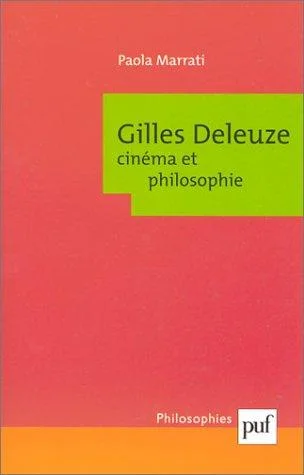
- Edition
- 2003 French first edition
- Publisher
- Presses Universitaires de France · 2003
- ISBN
- 978-2-13-052443-4
- Credit
- Open Library bibliographic thumbnail; edition independently checked against the Johns Hopkins University author bibliography; used for edition identification only
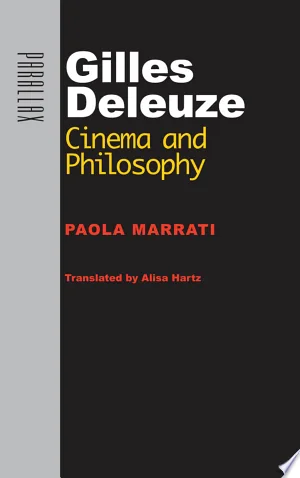
- Edition
- Translated by Alisa Hartz, 2008 hardcover
- Publisher
- Johns Hopkins University Press · 2008
- ISBN
- 978-0-8018-8802-1
- Credit
- Google Books bibliographic thumbnail; used for edition identification only
MARRATI STUDY / UNIT-BY-UNIT ARGUMENT
How cinema returns the world to thought
Eight reading units follow the introduction, six unnumbered main chapters, and conclusion. Apart from the introduction's three printed subheads, internal turns are this site's guide structure; all locators use printed pages in the 2003 PUF first edition.
INTRODUCTION · PUBLISHED HEADING: Introduction
SITE EDITORIAL SYNTHESISFilm theory, philosophical stakes, and Deleuze's trajectory must be read together
The Cinema books create concepts specific to film while changing Deleuze's account of images, immanence, and world.The introduction has three printed subheads. Marrati first distinguishes Deleuze from both Bazin's realist/phenomenological line and Metz's linguistic/psychoanalytic line, while stressing that the distance is asymmetrical: Deleuze rejects Bazin's realism but inherits and transforms his problem of a cinema of time. She then recasts representation through Bergson's plane of image, matter, light, and movement, before showing how cinema leads toward What Is Philosophy? and the modern problem of belief in the world.
- 01pp. 7–8
Deleuze and film theory
Cinematic perception has no fixed subjective centre, and images cannot be reduced to linguistic statements. Movement-image and time-image therefore reorganize debates about montage, narrative, and classical versus modern cinema.
- 02
- 03pp. 10–12
The Cinema books within Deleuze's work
Cinema brings Bergson into Deleuze's lineage of immanence, gives images movement and temporal depth, and recasts the modern crisis from the death of God to the loss of a relation with the world.
- p. 7
Sets out three inseparable axes: film theory, general philosophy, and the place of cinema within Deleuze's work.
- p. 8
Uses movement-image and time-image to reorganize cinematic signs, the classical-modern break, and twentieth-century problems.
- p. 9
Places representation at the centre and counters subject-centrism with the equivalence of image, matter, light, and movement.
- p. 10
Distinguishes seeing for action from seeing itself, linking classical sensory-motor cinema to the problem of modern time cinema.
- p. 11
Argues that cinema changes the ontological status of images and brings Bergson close to Spinoza in a lineage of immanence.
- p. 12
Defines the modern problem as the loss of a relation with the world and belief in creating modes of life within this world.
SITE GUIDE UNIT 01 · PUBLISHED HEADING: Images en mouvement et images-mouvement
SITE EDITORIAL SYNTHESISFrom images in movement to the movement-image
The shot releases more than displacement: it extracts a pure mobility that connects spatial change to open duration.Marrati begins with cinema's technology of any-instant-whatever, passes through Bergson's critique of the inner cinematograph, and uses Deleuze's reconstruction of three theses on movement to explain frame, out-of-field, and shot. The printed chapter has no internal subheads; the six turns below are site navigation.
- 01pp. 13–16
Any-instant-whatever
Cinema analyses movement continuously through equidistant instants, unlike arts that synthesize movement from privileged poses. This singular experience requires concepts made to its measure.
- 02pp. 17–21
The cinematographic illusion
Bergson treats the cinematograph as an external model of ordinary perception, language, and intellect: it extracts stable states and then pretends to reconstruct real movement with abstract time.
- 03pp. 21–26
Ancients and moderns
Ancient thought reconstructs movement from privileged instants, modern science from any instants. Both can spatialize creative duration, yet modern science also opens conditions for a new philosophy of movement and for cinema.
- 04
- 05pp. 30–35
Frame and out-of-field
A frame provisionally closes a set of visual and sonic information. Relative out-of-field links it to a larger space; absolute out-of-field lets open duration enter the closed system.
- 06pp. 35–37
The shot liberates movement
Moving objects within a fixed frontal space remain images in movement. Mobile camera and montage make the shot itself a mobile section, so movement no longer depends on a single carrier.
- pp. 14–15
Requires concepts to fit cinema's real experience and identifies its technological lineage of equidistant instants.
- pp. 19–20
Uses Zeno's paradox to distinguish indivisible, heterogeneous movement from divisible, homogeneous traversed space.
- pp. 23–24
Defines the time required for creation as duration and distinguishes it from spatialized time.
- pp. 26–27
States that Deleuze produces the unity of the three theses and defines the Whole as an Open that continually changes.
- pp. 33–34
Uses Renoir, Hitchcock, and Dreyer to distinguish relative out-of-field that adds space from absolute out-of-field that introduces duration.
- pp. 36–37
Distinguishes images in movement from movement-images and defines the shot as a mobile section of duration.
SITE GUIDE UNIT 02 · PUBLISHED HEADING: Cinéma et perception
SITE EDITORIAL SYNTHESISImages do not wait for a subject
The perceiving subject is not the origin of images but a local centre formed within the image-field through selection, delay, and affect.This unit confronts Heidegger's world-picture with Bergson's acentred universe of images, then follows the living image as it generates perception, action, and affection. Vertov and the close-up show cinema loosening the human centre while creating new perceptions and affects.
- 01pp. 38–40
World-picture and world of images
Heidegger's modern subject places the world before representation; Bergson's world consists of images that do not await humans, and cinema is not merely a technical copy of that world.
- 02pp. 40–45
Image–movement–matter–light
Images act on one another without pre-given coordinates. Matter is flowing image and light propagates within things; consciousness is not a lamp that illuminates objects but a local opacity in this luminous field.
- 03pp. 46–48
Living image and interval
A living image receives only selected stimuli and delays response. Perception arises by subtraction, action by selectable response, and affection occupies the interval between them.
- 04
- 05pp. 51–53
Carrying perception into matter
Vertov's kino-eye does not replace the human eye with a machine eye. Montage connects distant images, frees perception from a fixed viewpoint, and makes perception within things visible.
- 06pp. 54–59
Creation, not ontological duplication
Cinema is a real practice of images on the same plane of immanence. The close-up extracts an object from spatiotemporal coordinates and turns it into impersonal affect; classification follows images cinema creates rather than copies of a pre-given being.
- pp. 38–39
Uses Heidegger's subject–world-picture structure to show cinema's apparent fit with the modern model of representation.
- pp. 42–43
Establishes the equivalence of image, movement, and matter, then uses propagated light to explain appearance without a subject.
- pp. 46–47
Uses the stimulus–response interval, selection, and black screen to explain the living image and subtractive perception.
- pp. 48–49
Moves from perception-, action-, and affection-images to objective and subjective systems of reference.
- pp. 51–52
Uses Vertov's kino-eye and montage interval to carry perception from a fixed viewpoint back into matter.
- pp. 57–58
Recasts the close-up from scale to extraction from spatiotemporal coordinates, allowing an object to carry impersonal affect.
SITE GUIDE UNIT 03 · PUBLISHED HEADING: Le montage du Tout
SITE EDITORIAL SYNTHESISHow classical montage makes time and history
Classical montage organizes movement-images into a Whole, presents time indirectly, and links action to a people and universal history.Griffith and Eisenstein construct two forms of organic montage. One restores a Whole through juxtaposition, convergence, and duel; the other produces a new Whole through internal opposition and qualitative leap. Their difference is sharp, but both let movement compose time, derive narrative from images, and trust action to touch history.
- 01pp. 60–61
Indirect image of time
Montage composes movement-images through raccord, cut, and false raccord. As long as each image is treated as present, time must be inferred indirectly from relations between images.
- 02pp. 62–64
Griffith's organic Whole
Parallel, alternating, convergent, accelerated montage and close-ups organize differences within an organism that can be threatened and restored. Local actions ultimately join the fate of the Whole.
- 03pp. 64–66
Narrative derives from images
Classical narrative arises from the organico-active composition of images. Treating the image first as a statement obscures cinema's singular way of organizing meaning through movement.
- 04pp. 66–68
Eisenstein's dialectical Whole
The Whole divides internally through quantitative, qualitative, and dynamic oppositions, then passes by qualitative leap into a higher unity. Time does not surround events from outside but powers their dialectical genesis.
- 05pp. 68–71
The large form of the action-image
S–A–S′ lets a character read a determinate milieu, act, and transform the situation. Realism here means determinate milieus, embodied behaviour, and sensory-motor continuity.
- 06pp. 72–73
The break in historical belief
Classical action trusts humans to grasp a total situation and advance a people and history. Marrati treats fascism, Nazism, Stalinism, and war as an irreversible break in that belief.
- pp. 60–61
Defines montage as the composition of movement-images and an indirect image of time.
- pp. 62–63
Analyses Griffith's parallel, convergent, and accelerated montage and uses Intolerance to show an organic Whole across civilizations.
- pp. 65–66
Rejects the equation of image and statement and derives classical narrative from the composition of movement-images.
- pp. 67–68
Uses Battleship Potemkin and October to explain opposition, qualitative leap, and dialectical time.
- pp. 69–70
Defines the realist large form of the action-image through determinate milieu, embodied behaviour, and S–A–S′.
- pp. 72–73
Closes classical historical imagination with Nietzsche's three uses of history, then turns to the crisis of the action-image.
SITE GUIDE UNIT 04 · PUBLISHED HEADING: L’après-guerre
SITE EDITORIAL SYNTHESISWhen action fails, seeing begins
The postwar break does not stop characters from moving; it breaks the natural conversion of sights and sounds into adequate action.Rossellini makes characters see what ruins, factories, and ordinary environments no longer let established uses contain. Bazin explains this through ambiguity and temporal depth; Deleuze turns it into an event of thought: sensory-motor linkage breaks and pure optical and sound situations, weak links, and any-spaces-whatever emerge.
- 01pp. 74–76
Rossellini and the unreadable face
Edmund's face in Germany Year Zero does not supply an emotional verdict. Meaning must form through event and time rather than being closed in advance by montage.
- 02pp. 76–78
From realism to the seer
Bazin stresses that the shot preserves the ambiguity of reality; Deleuze stresses that a character learns to see after practical recognition fails. In Europe '51, the factory is no longer recognized as a workplace but becomes something that must be seen.
- 03pp. 78–80
Pure optical and sound situations
Characters can still run, wander, or speak, yet cannot close perception into an action that resolves the situation. Seeing and hearing acquire independent pressure.
- 04pp. 80–81
Any-space-whatever and weak links
Dispersive events, chance encounters, and ruined spaces replace determinate milieus fitted to action. Space no longer guarantees one use, and relations can begin again from disconnection.
- 05pp. 81–83
Cliché and new connection
Stopping movement does not suffice to make a new image. Fixed shots and empty spaces exceed cliché only when they connect with time and thought.
- 06pp. 84–85
Historical rupture within taxonomy
The postwar is not a date imposed on natural classification but the event in which belief in universal history collapses. Once teleology recedes, time, becoming, and event become new conditions of classification.
- pp. 74–75
Uses Edmund's unreadable face and ruined wandering to explain Bazin's realism of ambiguity.
- pp. 77–78
Distinguishes Bazin's realism from Deleuze's account of thought and uses Europe '51 to show that less recognition can yield more seeing.
- pp. 79–80
Connects pure optical and sound situations, characters unable to respond adequately, clichés, and any-spaces-whatever.
- pp. 81–82
Combines artistic change, war, propaganda, and a civilization of clichés, then requires images to create new links with time and thought.
- pp. 82–83
Explains why the old sensory-motor schema becomes an empty form once historical belief is lost.
- pp. 84–85
Addresses the tension between natural taxonomy and postwar rupture by replacing universal history with becoming and event.
SITE GUIDE UNIT 05 · PUBLISHED HEADING: L’image-temps
SITE EDITORIAL SYNTHESISTime is not a measure but a split within the image
Aberrant movement releases time, attentive perception connects the actual image to virtual past, and the crystal shows time continuously splitting and preserving itself.This unit removes the premise that images always occupy the present tense. Changes of speed, false raccords, disproportion, and decentring already make images bear time. Bergson's attentive circuits, pure memory, and inverted cone explain the coexistence of actual and virtual, while Welles makes that structure cinematic.
- 01pp. 86–89
Aberrant movement releases time
Measurable normal movement makes time its metric; aberrant, decentered movement breaks that subordination. Direct time does not require movement to stop.
- 02pp. 90–92
Habitual and attentive perception
Habitual perception moves horizontally to the next useful object; attentive perception returns to the same object, forming paired circuits of expanding memory and deepening reality.
- 03pp. 93–95
Description recreates the object
Descriptions by Robbe-Grillet, Resnais, Godard, and Rossellini extract different singular lines each time. Object and thought are recreated together in an open circuit.
- 04pp. 95–98
The smallest actual–virtual circuit
The actual present strictly coexists with its own virtual past. The two remain distinct but exchange positions in the crystal, making any stable assignment of an original impossible.
- 05pp. 98–100
The past preserves itself
Memory does not store the past in a psychic container. The present S connects at every instant to virtual sheets of the past at different contractions, making subjectivity an interiority of time itself.
- 06pp. 100–101
Characters move within sheets of the past
Depth of field in Citizen Kane is more than a technical achievement. As Kane walks toward his friend, he enters the sheet of the past in which their relation breaks; movement becomes subordinate to time.
- pp. 87–88
Releases direct time through decentered aberrant movement and uses Citizen Kane to show a character moving in time.
- pp. 90–91
Distinguishes automatic recognition that moves horizontally from attentive perception that repeatedly returns to one object.
- pp. 93–94
Connects attentive circuits to modern description, Last Year at Marienbad, Godard, and Stromboli.
- pp. 95–96
Uses the mirror maze in The Lady from Shanghai to show actual–virtual indiscernibility, then turns to coexistence of past and present.
- pp. 98–99
Links the crystal's split of time to the inverted cone connecting present S with virtual sheets of the past.
- pp. 100–101
Concludes with depth of field and sheets of the past in Citizen Kane, then points toward Resnais, Antonioni, Godard, and Tarkovsky.
SITE GUIDE UNIT 06 · PUBLISHED HEADING: Images et immanence. La question du monde
SITE EDITORIAL SYNTHESISFrom broken history to belief in the world
Modern cinema does not compensate the present with a future end; it creates new acts of seeing, choosing, and living within an intolerable world.Classical cinema joins action, people, and revolution into a belief that the world can be understood. Propaganda exposes the double power of images and historical purpose loses credibility. Modern cinema reduces the issue to its sharpest form: can humans still form a relation with this world? That cinematic problem finally rewrites the plane of immanence and the image of thought.
- 01pp. 102–104
Classical cinema's belief in a people
Action can read the world, a people can become the subject of history, and a future world can orient present struggle. American and Soviet cinema share this structure through different contents.
- 02pp. 105–107
The double power of images
The power of images to move masses can also serve fascism, Nazism, and state propaganda. A simple art–propaganda split cannot absolve cinema's own power.
- 03pp. 107–110
Resisting opinion and the present
Rejecting historical purpose cannot mean accepting the present. Thought begins under the impact of an unfamiliar force and resists opinion, stupidity, servitude, and the intolerable.
- 04pp. 111–113
The human–world relation
Modern doubt does not concern whether the world exists but whether we can participate in it. Belief precedes renewed seeing and turns the broken relation itself into an object of creation.
- 05pp. 114–118
Immanent belief and the missing people
Belief shifts from proof of knowledge to a choice of mode of life. It waits for neither an afterlife nor a future state; a people ceases to be a pre-unified subject and becomes minor, divided, and unfinished.
- 06pp. 119–123
Cinema rewrites immanence
Cinema brings Bergson's plane of movement, matter, and light into the lineage of immanence and forces Deleuze to pose anew how thought begins. An image of thought is not a mental picture but a structure presupposing how thought recognizes truth and finds direction; cinema turns such structures into a problem of plural, mobile, competing images.
- pp. 102–103
Rejects an aesthetic hierarchy between classical and modern cinema and links classical action to a vital belief that the world remains intelligible.
- pp. 105–106
Moves from cinema's revolutionary aspiration to state propaganda and the double power of images themselves.
- pp. 108–109
Restates the dogmatic image of thought through recognition, opinion, and internal stupidity, locating thought's beginning in an outside shock.
- p. 116
Frames the modern problem as loss of the human relation to the world rather than merely the death of God.
- pp. 117–118
In a long note crossing the page break, recasts a people as minor, divided, and unfinished becoming.
- pp. 121–122
Brings Bergson's plane of movement, matter, and light into the lineage of immanence and shows how cinema changes the image of thought.
CONCLUSION · PUBLISHED HEADING: Conclusion
SITE EDITORIAL SYNTHESISConcepts belong to cinema without lying ready-made inside films
Cinema and philosophy remain autonomous; they meet when two creative practices confront the same problem, not when philosophy applies theory to images.The conclusion returns to the paradox at the end of Cinema 2: philosophy creates cinematic concepts, so they do not lie ready-made in films; yet they must belong precisely to cinema and cannot be replaced by arbitrary external categories. The encounter leaves open the question of what philosophy is, which What Is Philosophy? continues.
- 01p. 124
Cinema thinks in images
Cinema constitutes an autonomous form of thought in images; filmmakers, spectators, and critics also think for themselves and do not need philosophy to authorize them. Philosophy likewise cannot reduce images to theoretical material.
- 02pp. 125–126
Philosophy creates concepts
Philosophy becomes philosophy of cinema only by creating concepts that did not exist before and that concrete cinematic problems force into being. The two practices retain their difference and meet at the level of problems.
- p. 124
Distinguishes concepts of cinema from theories about cinema.
- p. 124
Affirms cinema as autonomous thought that occurs within images.
- pp. 124–125
Defines philosophy likewise as creation rather than reflection on pre-given objects.
- p. 125
Philosophy creates concepts, yet they must belong precisely to cinema's singular experience.
- pp. 125–126
The Cinema books leave philosophy's specificity unresolved and connect their endpoint to What Is Philosophy?
- p. 126
Makes encounter a condition of thought and confirms that cinema leads Deleuze in new directions.
BOOK → SHOT → TEST / 书页 → 镜头 → 判据
20 film tests: theory must survive the shot
Marrati pp. 74–76
Germany Year Zero
Germania anno zero · 1948 · Roberto Rossellini / 罗伯托·罗西里尼Marrati opens the postwar chapter through Bazin's analysis of Edmund's unreadable face and prolonged wandering: the viewer cannot decide in advance whether the face expresses indifference, pain, or cruelty, and can only reinterpret the preceding time after his fall.
In the final sequence, walking, stopping, picking up, looking, and climbing all remain possible. Why can none of them repair the father's death, restore the family, or open a next step?
Sensory-motor rupture occurs when action ceases to be adequate to the situation, not when movement stops.
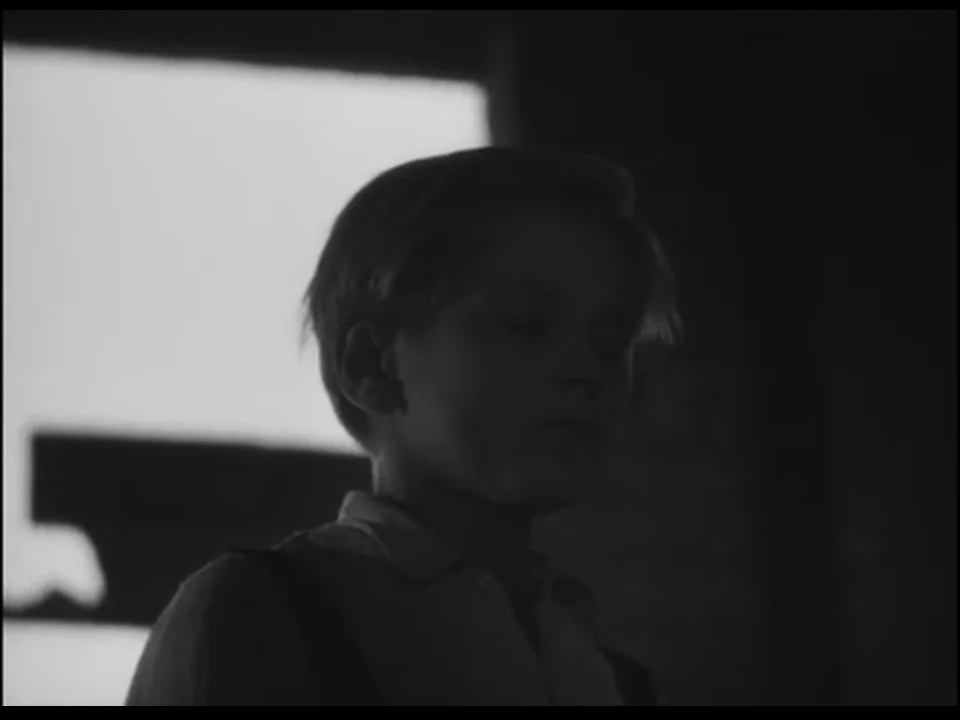 01:12:18
The long wandering turns streets, church, ruined buildings, traffic, and children's play from usable action-space into a city layer that must be watched. Bilibili timecode 01:12:18.
VISIBLEEdmund crosses streets and broken walls alone, pauses outside a church, and enters a building without intact walls.
AUDIBLEThe long passage is formed mainly by sustained orchestral music, traffic, distant children's voices, and urban ambience; Edmund speaks almost no dialogue.
SITE ANALYSISWandering must let space and sound endure beyond route-finding and turn the child's motor helplessness into intensified seeing; the finale satisfies both conditions.
Bilibili at 01:12:18 Bilibili · La-Jeunesse- · public repost page · verified 2026-08-13PUF 2003, pp. 76–78
Europe ’51
Europa ’51 · 1952 · Roberto Rossellini / 罗伯托·罗西里尼Marrati uses Europe ’51 to argue that Irene no longer ‘recognizes’ the factory through everyday practical use; because she recognizes less, she sees more and learns to become a seer.
The verified still and its approximate interval establish only machine scale, bodily proximity, and the coexistence of mechanical sound and dialogue. Which actions elsewhere in the film, and which textual coordinates, connect those facts to Marrati's account of failed practical recognition without making one frame bear a causal proof?
A single still is insufficient to establish that practical recognition has broken down. Read the approximate interval within the film-wide context of Irene taking a shift, seeking help, and caring, then cross-check it against Marrati's 2008 English translation, pp. 58–60, and Cinema 2, chapters 1 and 3. The present evidence then supports only a bounded judgment: local acts still work, yet use no longer exhausts the factory, and Irene moves toward the seer. This conclusion does not present 00:59:45–01:00:35 as the exact boundary of the complete factory passage.
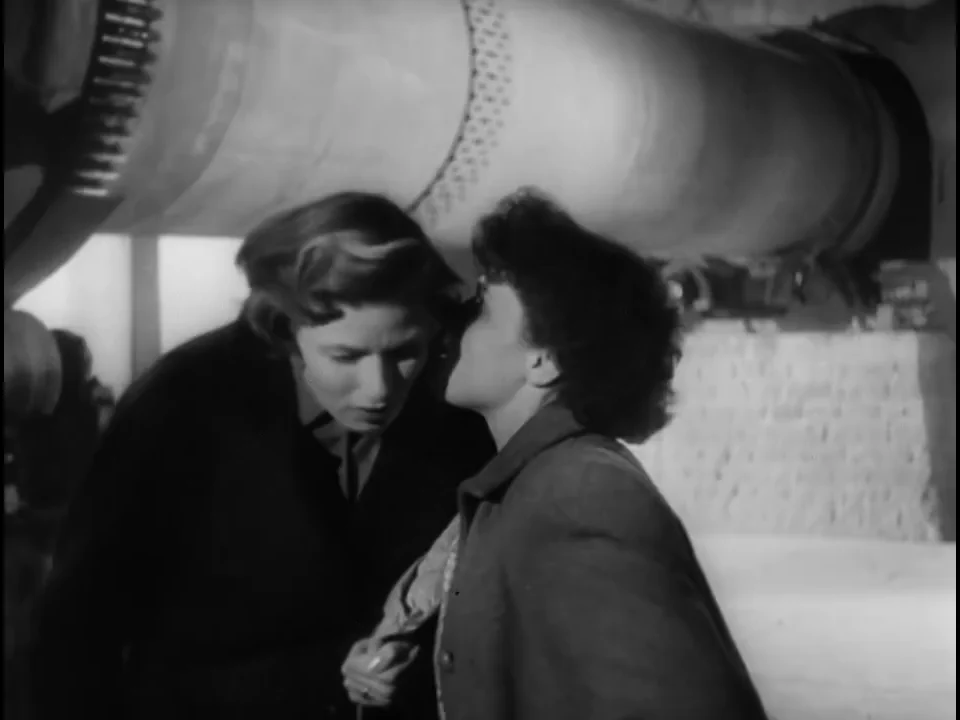 01:00:00
Cylindrical machinery occupies the upper frame; Irene and the worker converse at close range in the narrow passage below it while mechanical sound and dialogue coexist.
VISIBLEA huge cylindrical machine occupies the upper frame.
AUDIBLEContinuous mechanical sound coexists with the women's dialogue.
SITE ANALYSISThis still and approximate verification interval support only the audio-visual facts of machine scale, bodily distance, and the coexistence of mechanical sound and dialogue. Read with Deleuze's discussion of the factory's audio-visual ‘abstraction’ and the seer, Marrati's account of the failure of practical recognition, and Rushton's interpretation of ‘pure seeing,’ the atlas understands the passage as follows: local communication can still succeed, yet the factory is no longer exhausted by its use as a ‘workplace.’ This is not a causal fact that a single still can establish directly.
Deleuze, Cinema 2, Minnesota 1989 English translation, ch. 1, p. 2 and ch. 3, pp. 45–46; Marrati, Gilles Deleuze: Cinema and Philosophy, 2008 English translation, pp. 58–60; Rushton, Cinema After Deleuze, 2012, pp. 63–65.Bilibili at 01:00:00 Bilibili · Europa '51 complete film · verified 2026-08-14The more Irene converts private grief into executable aid, the more factory, poverty, and institution reveal a relational scale beyond individual goodwill, turning her from agent into seer.
Atlas analysis · evidence classification unrecorded.- 01Aid takes over from mourning
After her son's death, Irene leaves the social world of her wealthy household, visits poor districts, gives money, seeks medicine, and takes a worker's shift.
Grief is first extended into a series of helpful acts that still have objects, aims, and results. - 02The factory overwhelms the scale of action
On a shop floor whose pounding fills the soundtrack, machines stamp repeatedly and rows of workers follow one rhythm; Irene walks through, stops, and looks, her body reduced in scale.
One substituted shift cannot exhaust the industrial relation before her; sight and noise cease to be task-cues and become a situation without an immediate response. - 03The institution renames seeing
After she cares for a dying woman, helps a fugitive leave, and urges him to surrender, family, doctors, and court commit her; at the end she looks through a high window as visitors gaze up from outside.
The institution closes down her aid, but the relation of looking reverses: the diagnosed woman becomes the one who sees society's limit.
Marrati pp. 74–85 · site test
Journey to Italy
Viaggio in Italia · 1954 · Roberto Rossellini / 罗伯托·罗西里尼This site tests Marrati's postwar criterion in the Pompeii sequence: the more successfully archaeologists cast, clear, and identify two bodies, the less Katherine can convert what she sees into an action adequate to her marriage.
What does technical action complete, and what pressure of time remains in Katherine's seeing without being consumed by action?
The success of a local act can expose the failure of the larger action-structure, allowing seeing to acquire autonomous value.
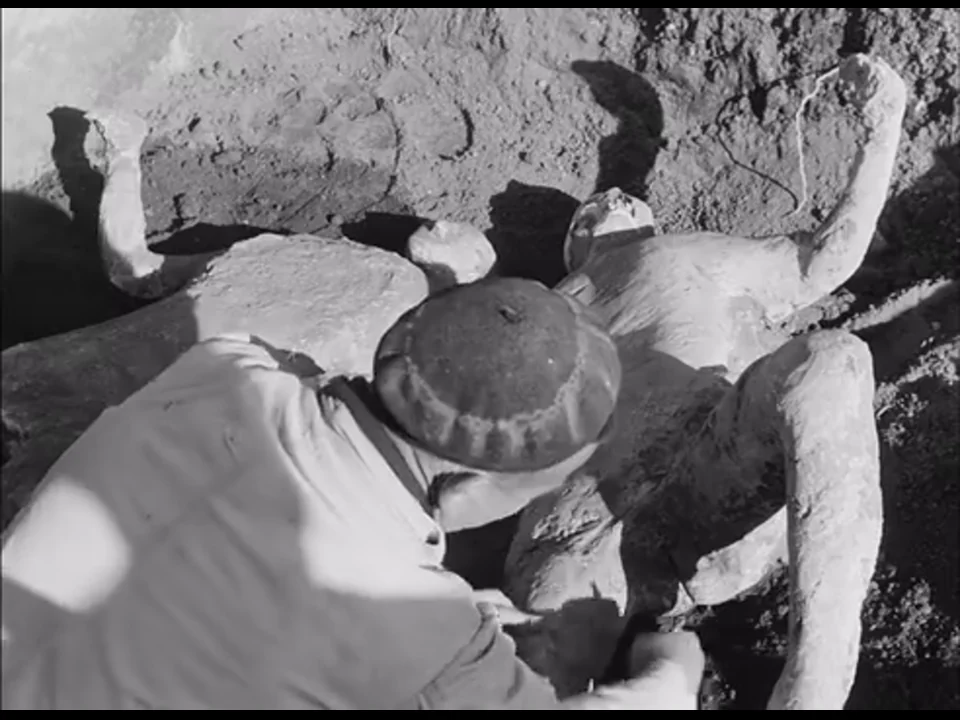 01:15:10
The technical operation successfully restores bodily contours while depriving the watching couple of their capacity to keep bearing the sight. Bilibili timecode 01:15:10.
VISIBLEWorkers use trowels, brushes, and hands to remove volcanic material; pale plaster gradually exposes a head, teeth, arms, and legs against dark soil.
AUDIBLEThe on-site commentary explains how plaster fills the cavity left after a body disintegrates and successively identifies legs, arms, skull, and teeth.
SITE ANALYSISTechnical reconstruction's success and sensory-motor response's failure must both remain visible; neither the bodies nor the couple alone is sufficient.
Bilibili at 01:15:10 Bilibili · Steppenwolffff · public repost page · verified 2026-08-13Marrati pp. 95–96
The Lady from Shanghai
The Lady from Shanghai · 1947 · Orson Welles / 奥逊·威尔斯Marrati uses the mirror maze to show actual and virtual entering the smallest circuit: bodies are absorbed by reflections, reflections acquire visible actuality, and gunfire finally shatters the apparatus of exchange.
Mark bodies, reflections, doubles, and gunshots in sequence: which transition makes the two sides unassignable, and which act ends their exchange?
A mirror enters the crystalline relation only when it performs actual-virtual exchange; spatial duplication alone is insufficient.
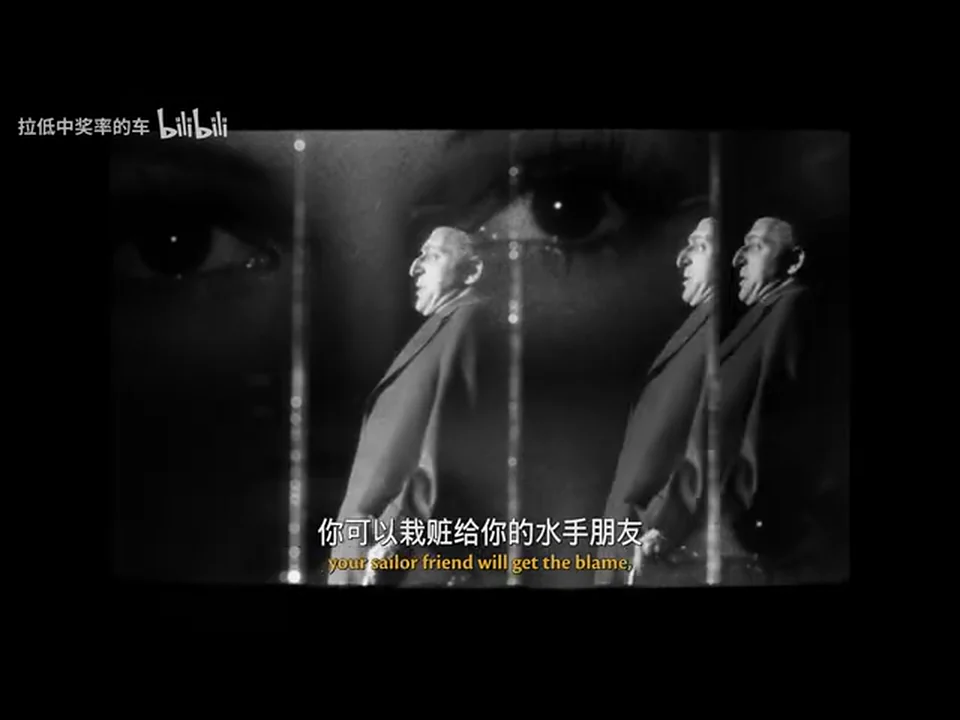 01:23:40
One speaker becomes body, reflection, and watched double at the same time.
VISIBLEThree profiles of Bannister stand side by side while mirror seams split them apart.
AUDIBLEBannister continues shifting blame toward O'Hara; one voice corresponds to several visible bodies.
SITE ANALYSISActual body and virtual reflections remain distinguishable while continually exchanging within the hall; the later shattering is not decoration but the termination of this crystal circuit.
Cinema 2, chapter 4, pp. 68–87.Bilibili at 01:23:40 Bilibili · The Lady from Shanghai complete film · verified 2026-08-14Deception first makes identities exchange within narration; the funhouse and mirror maze then turn that unreliable relation into a visible circuit of copies until gunfire cracks the crystal.
Atlas analysis · evidence classification unrecorded.- 01Each figure supplies a version
Once Michael boards Bannister's yacht, Elsa, Grisby, and Bannister each advance accounts of love, faked death, murder, and legal escape.
Action proceeds through narratives that keep changing hands, drawing any stable tribunal of fact into the deceptive relation. - 02The funhouse spatializes versions
Michael crosses funhouse sets that rotate, tilt, and distort bodily scale; shadows, false passages, and grotesque surfaces block a straight escape.
Narrative unreliability becomes spatial unreliability as bodies and doubles lose stable coordinates. - 03Shattered mirrors terminate exchange
The hall of mirrors multiplies Elsa, Bannister, and their guns into rows of images; they fire at reflections, cracks spread, and only after mirrors fall do wounded bodies re-emerge.
Actual body and mirror-image become briefly indiscernible; gunfire does not expose one illusion but destroys the circuit sustaining their exchange.
Marrati pp. 100–101 · site test
Citizen Kane
Citizen Kane · 1941 · Orson Welles / 奥逊·威尔斯On pp. 100–101, Marrati uses depth of field to show how a character moves within a sheet of the past; this site extends that criterion to the film's investigative structure: as the reporter consults archives and witnesses, he does not approach one definitive Kane but moves among non-coincident sheets of the past.
What Kane is preserved by the Thatcher archive, Bernstein, Leland, Susan, and Raymond respectively, and why can 'Rosebud' not gather those sheets into a single truth?
The past is not a container awaiting restoration but a set of sheets selected, entered, and redistributed by different questions.
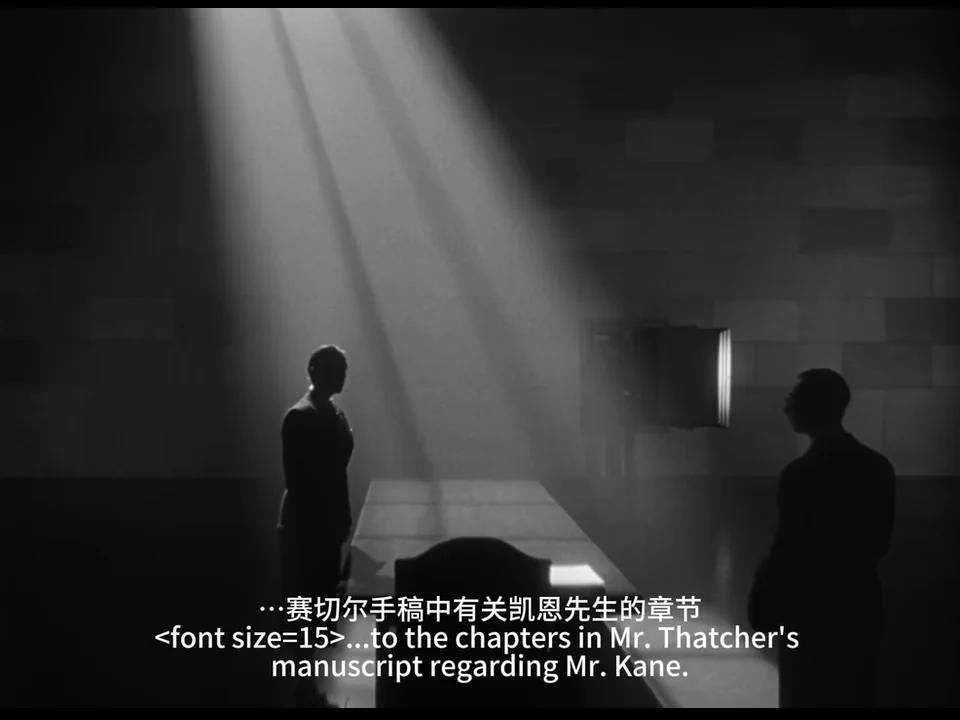 第3分段 00:00:15 / Part 3 00:00:15
The investigation does not return to one past; it enters one sheet through a witness document.
VISIBLEA single overhead beam cuts out the large reading table and manuscript while the figures recede into silhouettes.
AUDIBLEThe attendant directs Thompson to the chapters of Thatcher's manuscript concerning Kane.
SITE ANALYSISThe manuscript is not a key that solves a life but one sheet opened by witness, document, and image; later testimonies enter other sheets.
Cinema 2, chapter 5, pp. 105, 110–111, 115–119.Bilibili at 第3分段 00:00:15 / Part 3 00:00:15 Bilibili · Citizen Kane, part 3 · verified 2026-08-14A reporter searches a whole life through one word, but testimony, deep-focus space, and the final unseen sled distribute Kane across several coexisting sheets of past.
Atlas analysis · evidence classification unrecorded.- 01A last word starts the search
Kane says 'Rosebud' before dying and drops a snow globe; the reporter then consults Thatcher's unpublished memoir and interviews Bernstein, Leland, Susan, and the butler Raymond.
A word is installed as a solvable clue, as if the past could be recalled sheet by sheet through testimony. - 02One life divides among different sheets
Each testimony enters a different age, space, and affective position; the deep-focus guardianship scene holds the indoor contract together with the child playing in snow outside.
The past does not queue along one causal line but coexists in planes that cannot totalize one another. - 03The answer leaves the investigator behind
The reporter concludes that no single possession can explain a man; workers then throw the childhood sled marked 'Rosebud' into the furnace, unseen by the investigators.
The disclosure does not synthesize the sheets into a truth; it shows the image preserving a past neither character nor inquiry can actualize.
Marrati pp. 96–101 · site test
Mirror
Зеркало · 1974 · Andrei Tarkovsky / 安德烈·塔可夫斯基Marrati points toward Tarkovsky at the end of the unit; this site further tests how mother/wife, childhood/adulthood, and news archive/family memory let a present coexist with its own virtual past.
Do not begin by asking which passage is a memory. Ask how each return of face, house, and soundtrack rewrites the actuality of the present shot.
The crystal presents the ongoing act by which time splits, not a collection of memories that can be restored to chronological order.
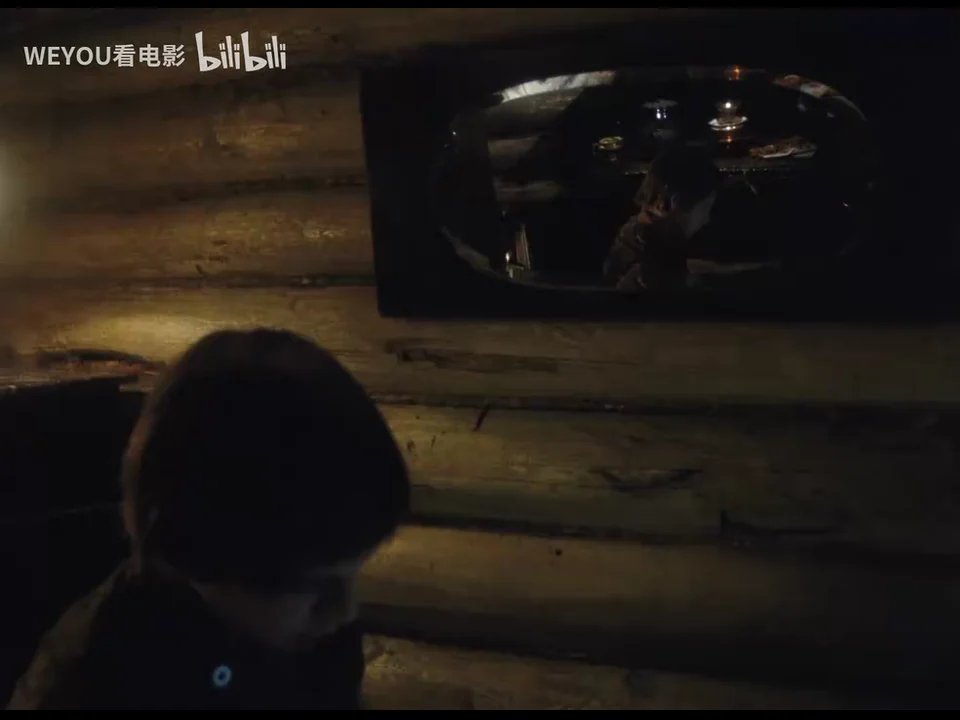 01:25:00
The boy outside the mirror and the reflected figures share one composition without reducing to one viewing position.
VISIBLEThe boy's head remains below and outside the mirror; the oval glass inserts another group into the same timber-wall composition.
AUDIBLEInside and outside the mirror share one continuous interior sound field; the reflected image receives no separate source of sound.
SITE ANALYSISThis mirror shot establishes only two visible zones within one composition; it does not by itself prove actual–virtual exchange. A crystalline reading still requires the returns of mother/wife, shifts between childhood and adulthood, and the archival passages.
Cinema 2, chapter 4, pp. 68–87.Bilibili at 01:25:00 Bilibili · Mirror complete film · verified 2026-08-14The same face, house, and material elements keep changing places between childhood and present, making memory not an inserted return to the past but a crystal that turns reality from within.
Atlas analysis · evidence classification unrecorded.- 01Matter first connects times
Wind presses across the childhood field, doors and windows stir, and mother and children stand watching a barn burn; fire, water, smoke, and wooden walls persist beyond their actions.
The past first appears as a material milieu still at work, not as a private recollection explained by the adult. - 02One face exchanges generational positions
The same actor is both Maria, the mother in childhood, and Natalia, the former wife in the present; mirrors, doorways, and turns join the identities through similar gestures.
Resemblance no longer confirms one person but makes actual present and virtual past exchange which side is clear. - 03Ages coexist in one field
At the end the aged mother walks through the field beside the narrator's childhood children, while the younger mother occupies another temporal position in the same countryside.
Temporal sheets no longer obey the recollective order of one present; figures, ages, and place compose a turning crystal.
Marrati pp. 74–85 · site test
Tokyo Story
東京物語 · 1953 · Yasujirō Ozu / 小津安二郎This site uses Ozu's rooms, smokestacks, sea, and lingering views after exits to test a boundary: an empty shot becomes a time-image not because it lacks action, but because spatial duration is no longer exhausted by the result of family action.
Compare the arriving train, the backs on the seawall, and the house after the mother's death: which displacements does transport complete, and which family changes can only be borne by spatial duration?
The everyday is not the opposite of event; what continues after plot withdraws can directly disclose irreversible change.
Ozu lets rooms, smokestacks, and corridors outlast family action, making the everyday bear time directly.
Atlas analysis · evidence classification unrecorded.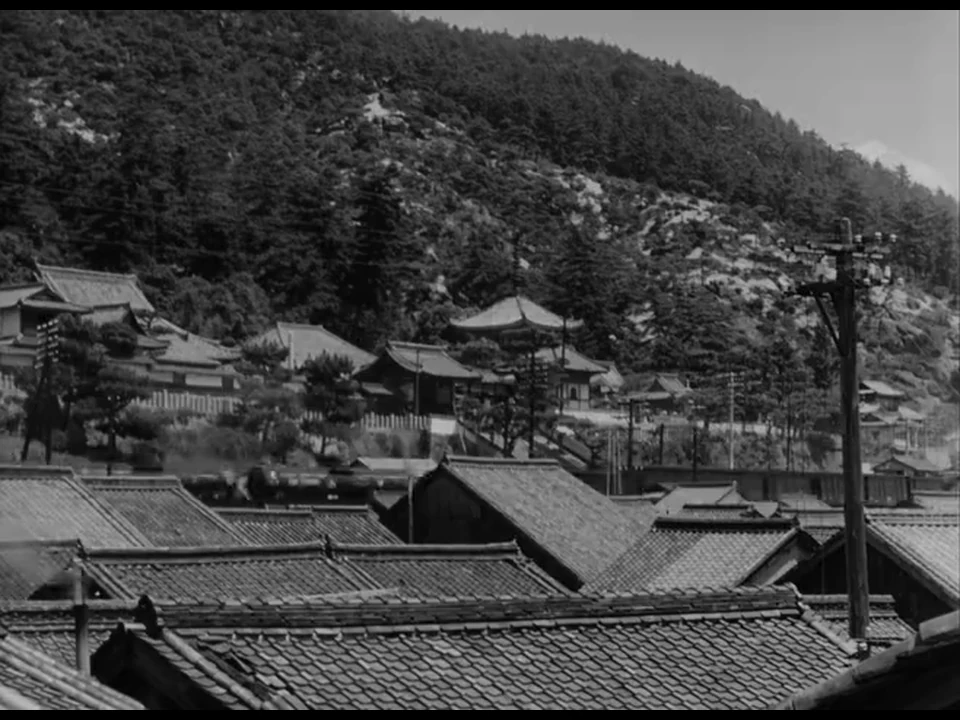 00:03:01
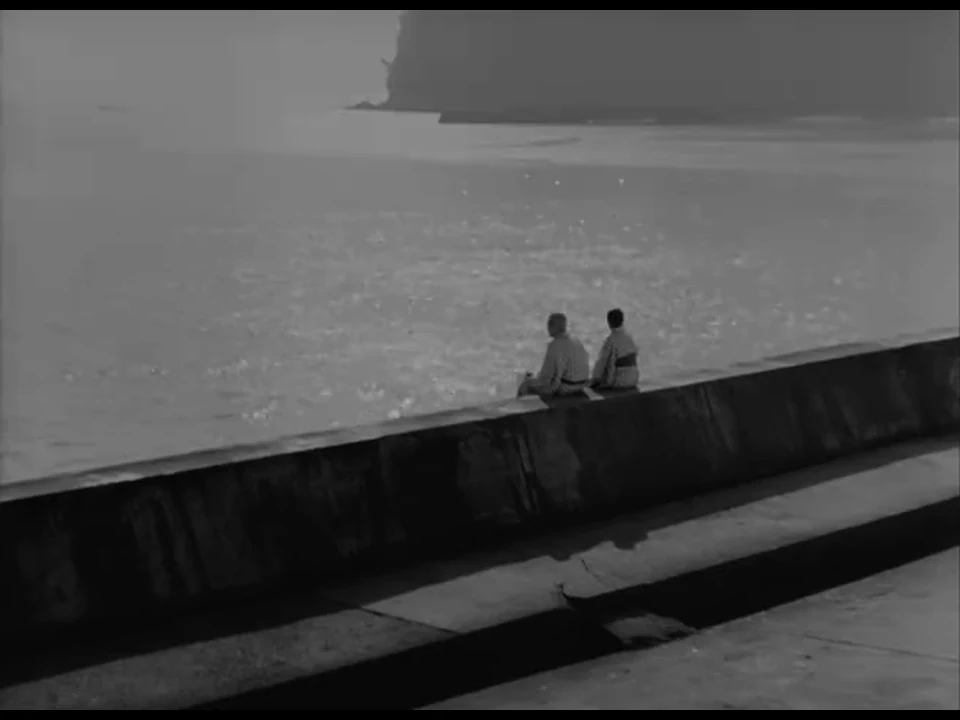 00:53:28
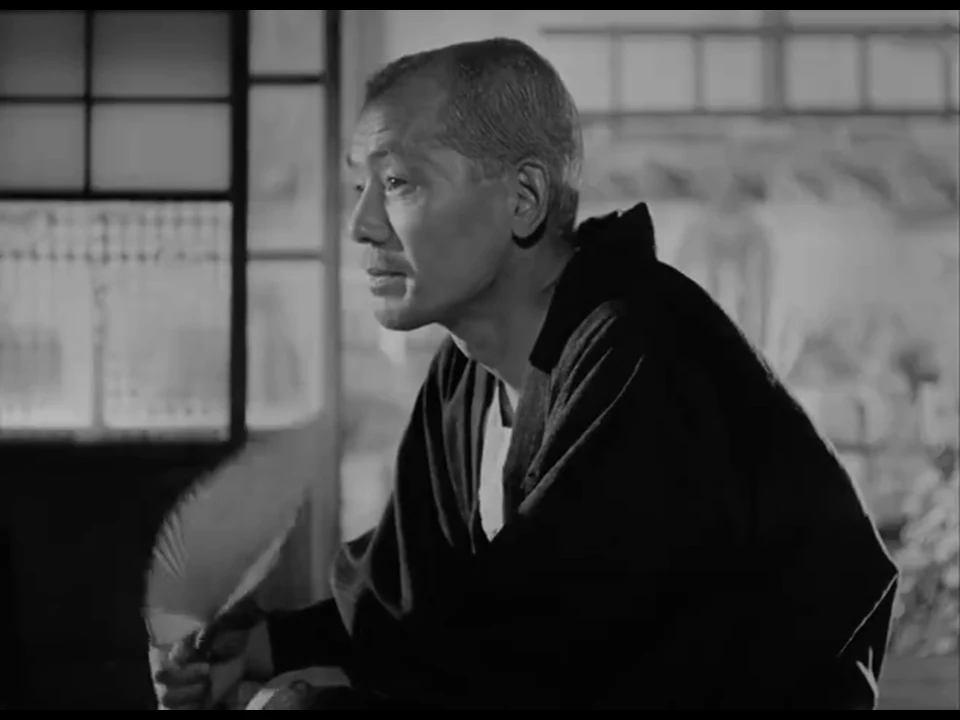 02:14:58
- 01Transit fails to form a community
Trains and buses complete the parents’ movement, while the children’s rescheduling breaks the visit into brief hosting duties.
Effective movement does not generate adequate family action. - 02Empty views take the interval
After characters leave, the fixed low camera remains with rooms, corridors, smokestacks, and sea.
Place changes from plot passage into an optical sign with duration of its own. - 03Change remains in an unchanging form
After the mother’s death, house, sea, and ordinary gestures continue; grief is not exhausted by climax.
Time appears as irreversible minute change within the persistence of life.
Marrati pp. 102–118 · site test
Pour la suite du monde
Pour la suite du monde · 1963 · Pierre Perrault & Michel Brault / 皮埃尔·佩罗、米歇尔·布罗This site makes 'belief in the world' observable as collective production: a long-interrupted beluga hunt passes from oral memory into funding, equipment, tide, stakes, ritual, and delegated speech, forming a position capable of saying 'we.'
Which utterance changes participants, resources, roles, or authority to speak, and which labour proves that speech has not remained a myth of community?
Belief is not an optimistic judgment but the fabrication of a new speech-action relation within a world that offers no guarantee.
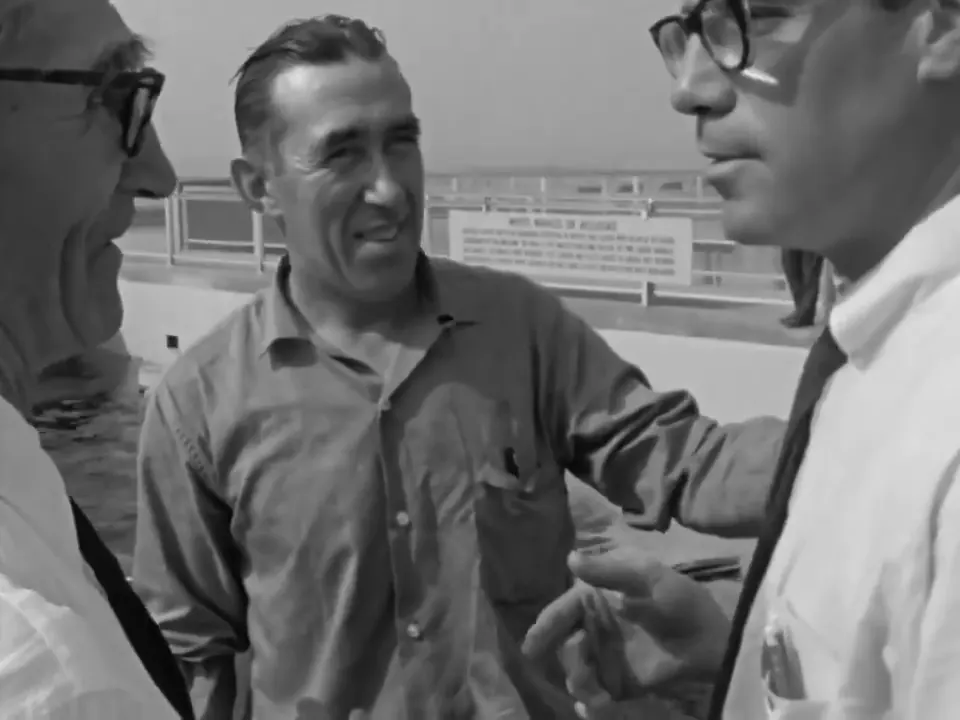 01:40:00
The group delegates one member to speak for them inside an institutional setting.
VISIBLEThree men converse in an outdoor area of the aquarium; one occupies the position between the other two.
AUDIBLEThe exchange explicitly delegates one participant to speak for the group.
SITE ANALYSISDelegation is spoken by group members and changes who can speak in what capacity.
Bilibili at 01:40:00 Bilibili · 牛仔C麦 · user-provided public repost page · verified 2026-08-13Marrati pp. 68–71, 102–103 · site test
High Noon
High Noon · 1952 · Fred Zinnemann / 弗雷德·金尼曼This site places Marrati's account of the large action form S–A–S′ and classical cinema's belief in the world inside a one-hour countdown: the duel transforms the immediate danger but does not restore Kane's relation to the town.
Clock faces repeatedly convert perception into a deadline for action. Why must the badge still fall into the dust after the gunfight ends?
Successful action is not repaired relation: danger disappears, yet the transformed situation S′ still fails to recompose the community.
The countdown keeps time subordinate to an action deadline; after action succeeds, communal relation remains unrepaired.
Atlas analysis · evidence classification unrecorded.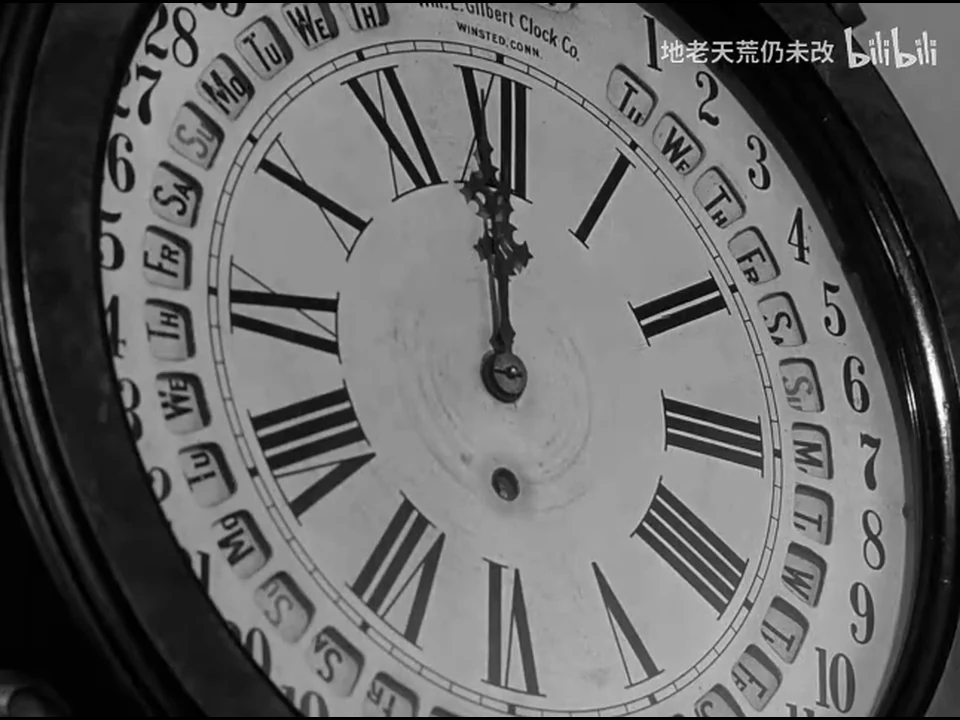 01:09:23
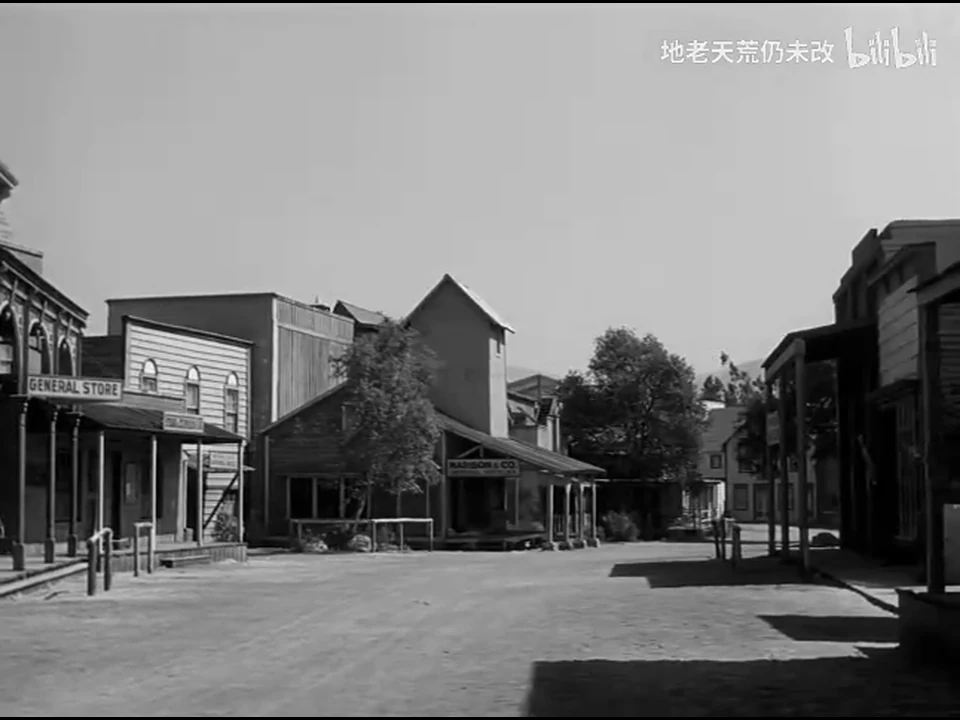 01:11:28
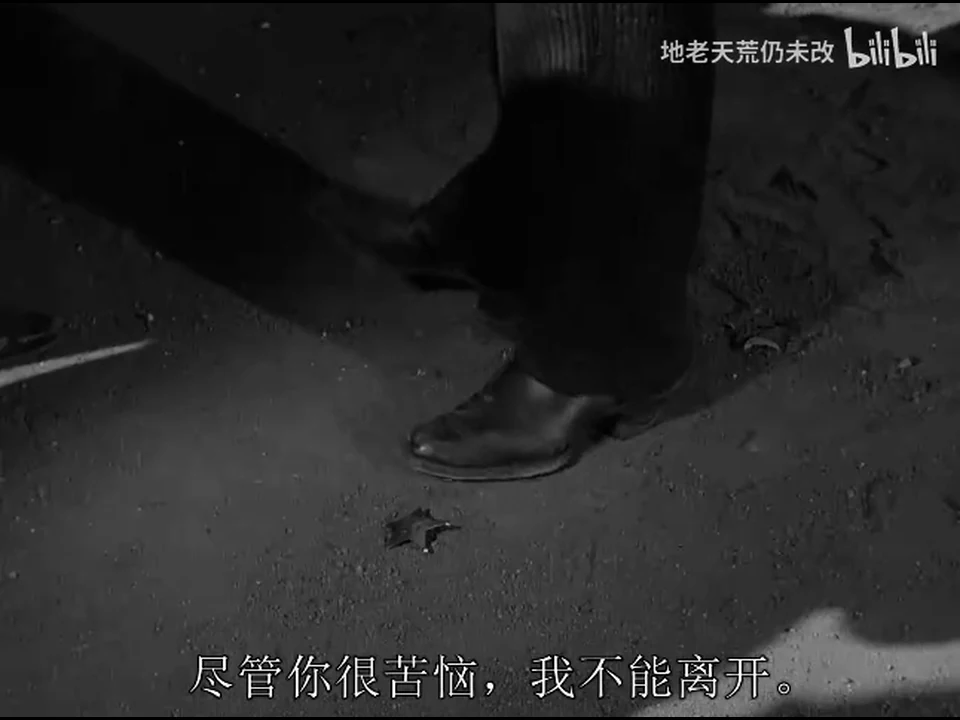 01:24:01
- 01Clocks organize perception
Clocks, tracks, empty streets, and waiting figures are cross-cut toward the noon arrival.
Every sight becomes information for a deadline; time remains an indirect measure. - 02Milieu refuses collective force
Kane asks door by door for help; doors, church, and offices return the request to him alone.
The situation of the large form cannot organize adequate collective action. - 03Victory cannot repair the world
After winning the duel, Kane throws the badge into the dust and leaves.
Action changes the danger without restoring belief in the community.
Marrati pp. 111–118 · site test
Close-Up
Nema-ye Nazdik · 1990 · Abbas Kiarostami / 阿巴斯·基亚罗斯塔米This site tests Close-Up through Marrati's account of life-choice, relation to the world, and a missing people: Sabzian is at once defendant, performer, and a person rearranging his relations through cinema.
How do courtroom address, reenactment by the participants, and the final motorcycle encounter successively alter who may speak for the real? Why does damaged sound prevent reconciliation from becoming a final verdict?
The film appoints no final judge between true and false; lie, performance, and technical rupture jointly produce a new real relation.
Trial, documentary recording, and reenactment make participants perform themselves; truth-testing shifts toward what relations and lives a lie can produce.
Atlas analysis · evidence classification unrecorded.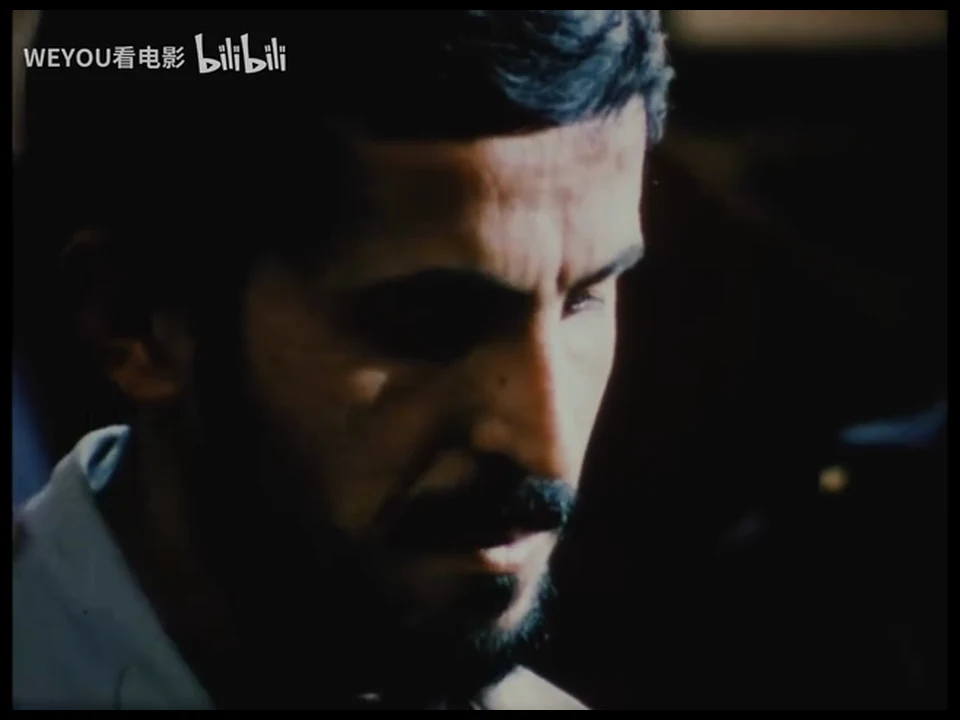 00:54:30
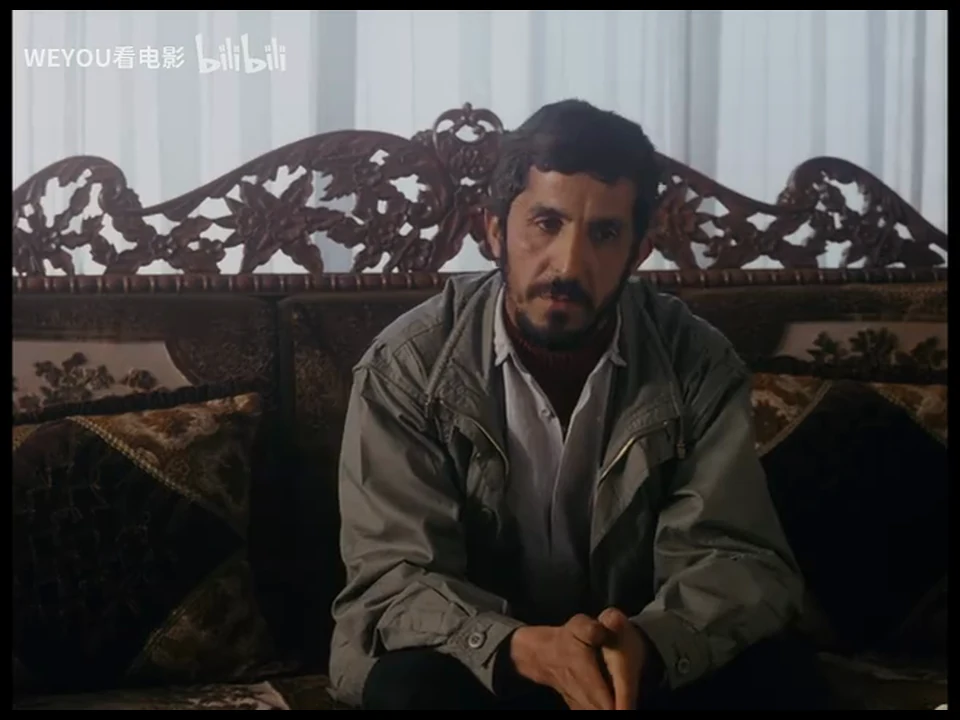 01:04:30
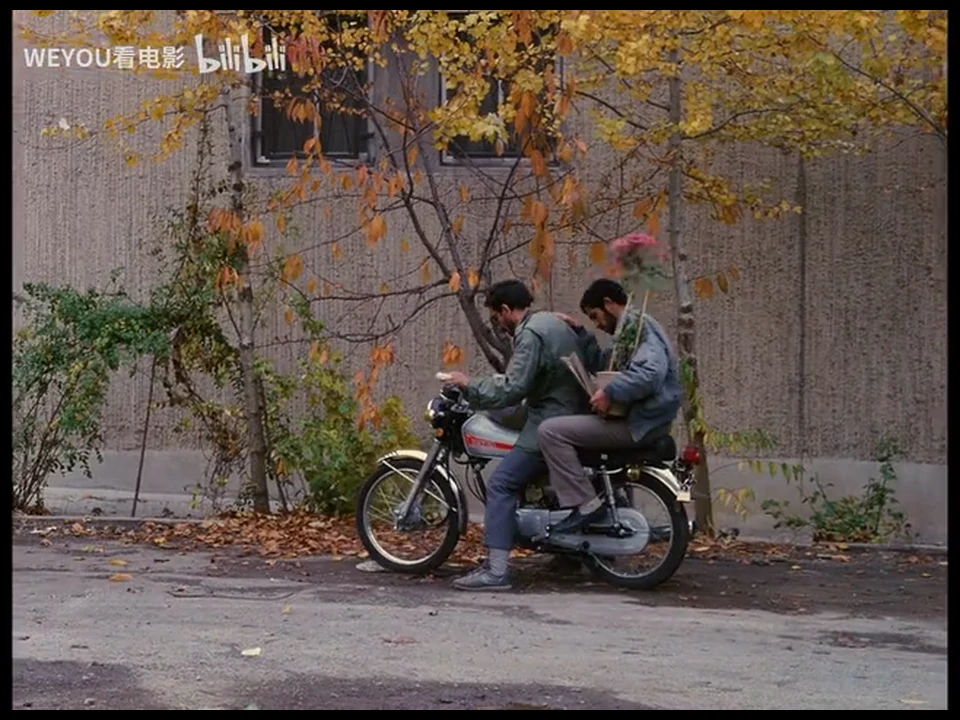 01:34:00
- 01A chance object interrupts inquiry
As the reporter accompanies police to the Ahankhah home to arrest Sabzian, an aerosol can rolls down the street and the camera leaves people and testimony.
‘Finding truth’ no longer monopolizes the image; chance reality retains force of its own. - 02Participants perform themselves
Direct address in court intersects with reenactment of the first visit; Sabzian is defendant, actor, and author.
True and false identities lose a single tribunal and enter a productive series. - 03Technical gap keeps the ending open
Sound repeatedly fails during Sabzian’s motorcycle meeting with Makhmalbaf.
Reconciliation is arranged and accidental; incomplete sound refuses to certify a final real.
Marrati pp. 33–34 · site test
North by Northwest
North by Northwest · 1959 · Alfred Hitchcock / 阿尔弗雷德·希区柯克Marrati discusses Hitchcock's out-of-field relations here; this site applies the criterion to the crop-duster sequence, where the aircraft becomes threatening not by appearance but by a reversal of use that rewrites the entire open field.
How do road, field, stranger, and aircraft first compose neutral waiting? Which relational reversal turns offscreen space into a killing apparatus?
The out-of-field is not a leftover zone beyond the frame but a relational whole capable of redefining what appears within it.
Ordinary terms first interpret one another within a habitual series; the crop-duster's appearance where there are no crops to spray makes it a demark that reroutes the series. A relational web of names, institutions, and spectator knowledge then continues to govern action.
Atlas analysis · evidence classification unrecorded.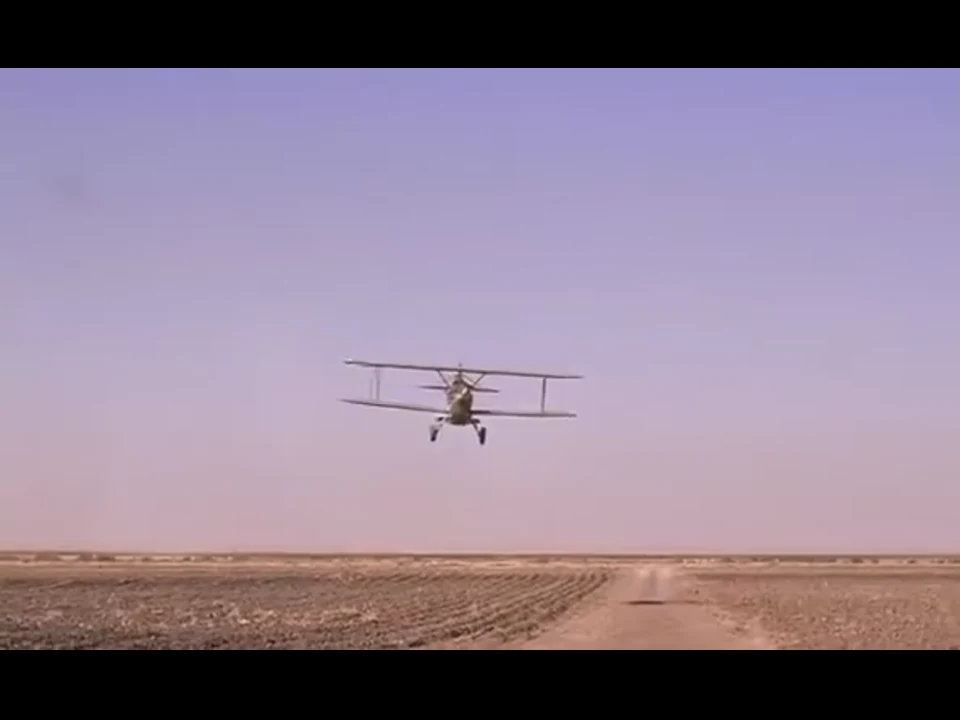 01:12:00
- 01The grid proposes a relational reading
The opening diagonal grid bears the title and directional arrows before giving way to a glass façade and crossing crowds; Thornhill is then mistaken for an empty name.
Grid and misrecognition together propose that relational positions determine the character; formal resemblance alone does not establish a relation-image. - 02A crop-duster where there are no crops
Waiting, passing vehicles, and open farmland first compose a predictable series; a stranger notes that the plane is dusting where there are no crops.
The plane is not classified by an odd appearance; the relational contradiction makes it a demark that reroutes the established series. - 03A match cut recloses action
The hand movement of the cliff rescue matches into an embrace in the train berth, contracting pursuit, romance, and marital ending into one continuous action.
The ending shows that relational organization has not abolished sensory-motor closure; the cut makes relation-image and action resolution test one another.
Marrati pp. 30–35, 46–48, 68–71 · site test
M
M – Eine Stadt sucht einen Mörder · 1931 · Fritz Lang / 弗里茨·朗This site joins Marrati's out-of-field, stimulus-response interval, and large action form within one pursuit: a whistle first makes the murderer present as unseen sound, after which police and underworld organize the whole city through the same rationality.
When police and underworld both turn cues into efficient action while M says in the underground court that he cannot stop, is the decisive conflict still merely pursuers versus murderer?
The action-machine can operate perfectly yet encounter a body the same stimulus-response model cannot explain; the rupture emerges inside the regime of action.
Police and underworld share one organizational reason, while M's uncontrollable impulse relocates the true duel between action and affect.
Atlas analysis · evidence classification unrecorded.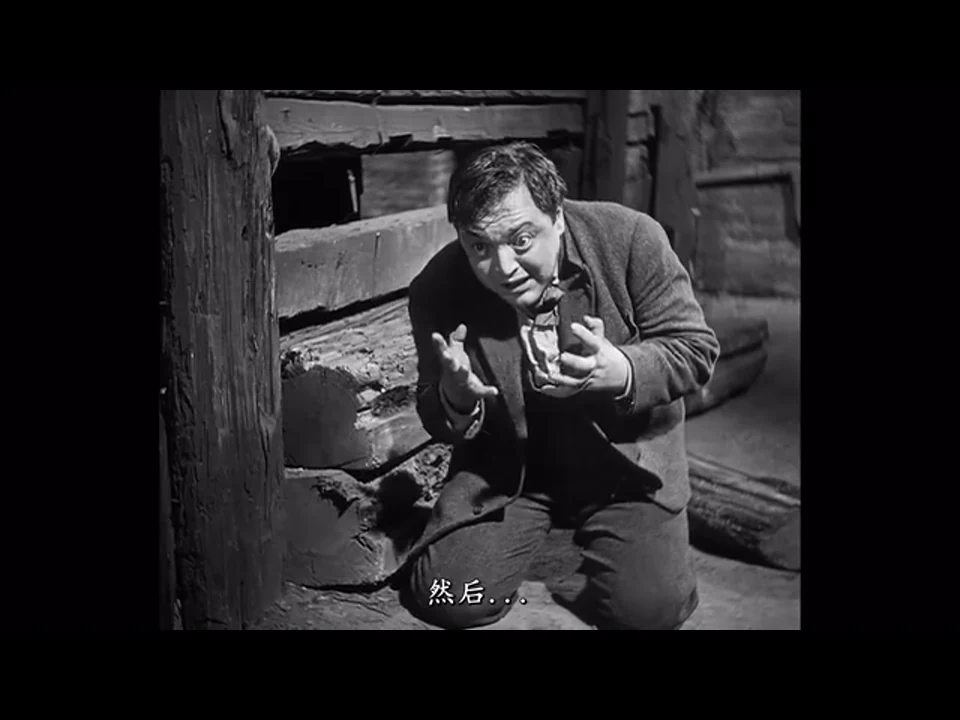 01:44:10
- 01Sound produces the unseen
The whistle comes first, followed by the waiting mother, empty stair, rolling ball, and balloon caught on a wire.
Offscreen sound turns an absent body into the perceptual object of a citywide hunt. - 02Opponents share a machine
Police and underworld meetings crosscut through similar tables, smoke, maps, and divisions of labour.
Law and crime mirror one another in organized action, weakening the explanatory power of binary opposition. - 03Tribunal exposes the gap
The underworld tribunal judges M by professional rules, while he cries that he cannot stop his murderous compulsion.
The real duel shifts between manageable conduct and uncontrollable affect, cracking the action-image from within.
Marrati pp. 26–37, 54–59 · site test
Sunrise: A Song of Two Humans
Sunrise: A Song of Two Humans · 1927 · F. W. Murnau / F·W·茂瑙This site rereads the boat sequence through Marrati's open whole, mobile section, and impersonal affect: the murder-act is not completed, and fog, face, rocking boat, and water take over the transformation of relation.
When the husband's raised hand stops before his wife, which movements of light, gesture, and milieu rewrite a planned action as fear and remorse?
Affect is not a psychological explanation added after action; when action is suspended, face and milieu can directly bear a relation's intensive change.
Changes of light between marsh and city directly rewrite the marriage, making ethical reversal a shared event of milieu, face, and movement.
Atlas analysis · evidence classification unrecorded.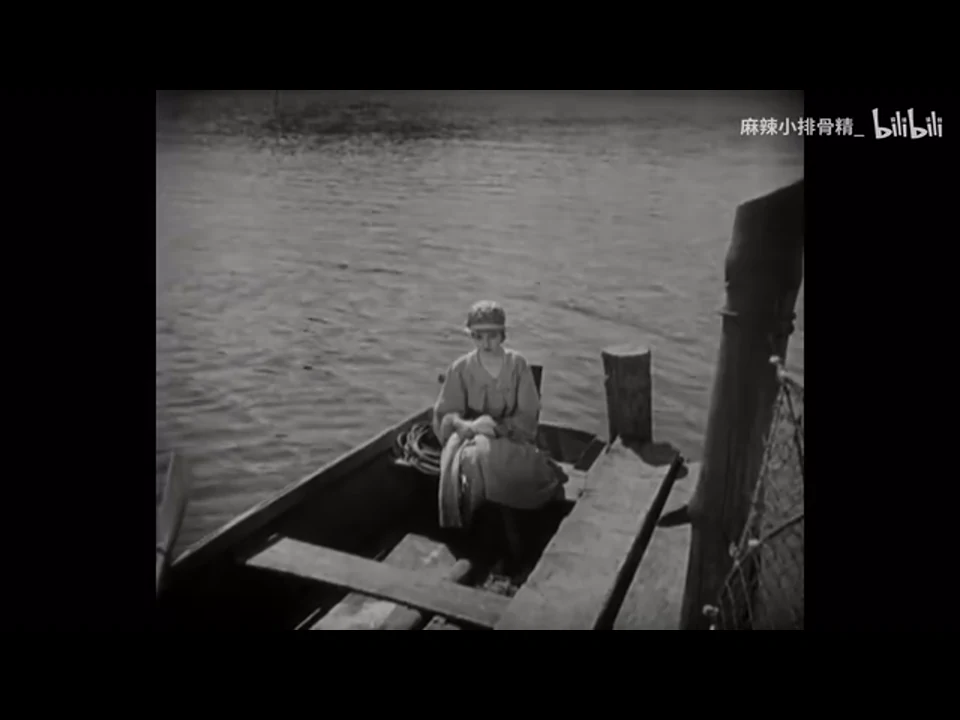 00:28:18
- 01Desire projects light into darkness
The man enters the marsh as city lights are superimposed over reeds and the lovers' bodies.
Distant temptation enters the present milieu as a virtual path of light; darkness ceases to be mere setting. - 02Action stops before the face
In the boat, the husband raises his arms to push his wife overboard, then stops before her terrified face.
The murderous act fails, the face takes over, and the crisis of action becomes affection. - 03Light recomposes relation
After the false report of her drowning, searchlights cut the lake before daylight illuminates the couple again.
Gradations of light transform milieu and relation together, giving the movement-image an ethical direction.
Marrati pp. 68–71, 102–104 · site test
The Crowd
The Crowd · 1928 · King Vidor / 金·维多This site tests the large action form and American cinema's belief in the world through the opening and ending: the camera finds John among countless office windows, then returns his laughter to an indistinguishable audience.
The individual is located by the city, acts and strives, then is absorbed again by the crowd. Why does this route fold S–A–S′ back into S–A–S?
The film frustrates, from within its form, the belief that action transforms situation: actions accumulate experience without changing the individual's replaceable place in the whole.
The city first locates the individual as a point in the crowd, then returns every effort to its origin, closing the large form's ascending spiral into a loop.
Atlas analysis · evidence classification unrecorded.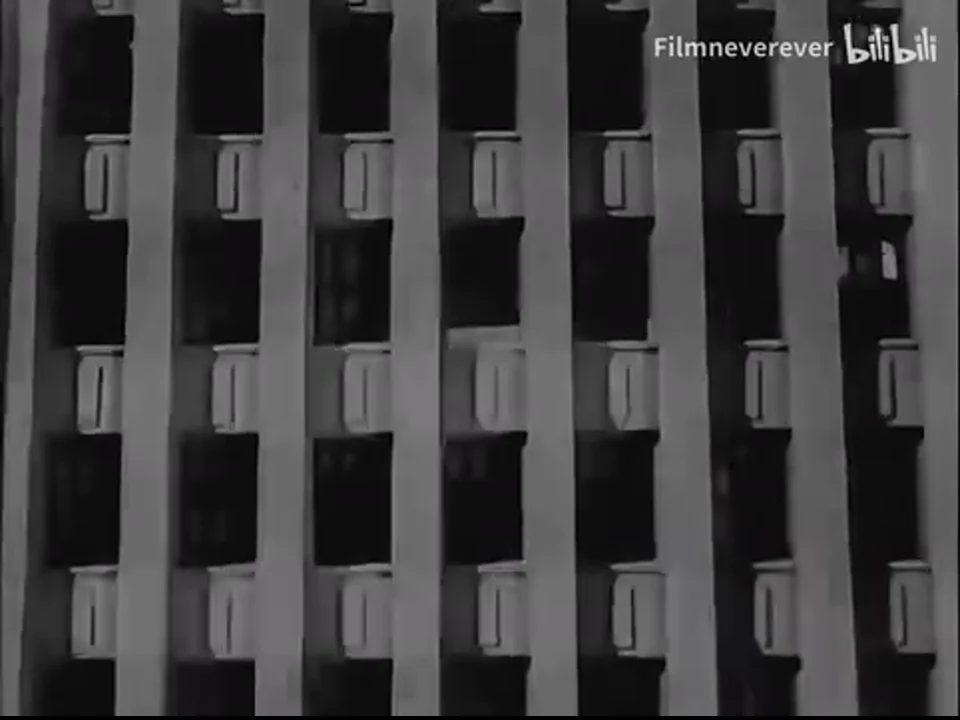 00:07:30
- 01The individual is located by the crowd
The camera moves against street flow into a skyscraper, passing countless windows and desks before finding John.
Continuous perception embeds the protagonist in an exchangeable social set rather than singling him out. - 02Milieu refuses response
After his daughter's accident, John's running, work, and appeals are repeatedly delayed by crowds and institutions.
Action cannot transform the milieu into an adequate new situation; the large form S–A–S′ fails. - 03Laughter closes the loop
At the end, the family laughs in a theatre as the camera pulls back and makes them small points in the crowd again.
The situation eases without changing and returns to its start; S–A–S becomes the American nightmare.
Marrati pp. 95–98 · site test
Lola Montès
Lola Montès · 1955 · Max Ophüls / 马克斯·奥菲尔斯This site tests the circus structure through the minimal actual-virtual circuit, with Cinema 2, chapter 4, pp. 86–87 as a primary return point: each return of the past redefines the actuality of the body displayed onstage.
Does the circus present merely introduce flashbacks, or do paid viewing, public questioning, and reenacted pasts continually rewrite who Lola is?
A crystalline relation is not the insertion of recollection; present display and virtual past must coexist and exchange their respective weight of actuality.
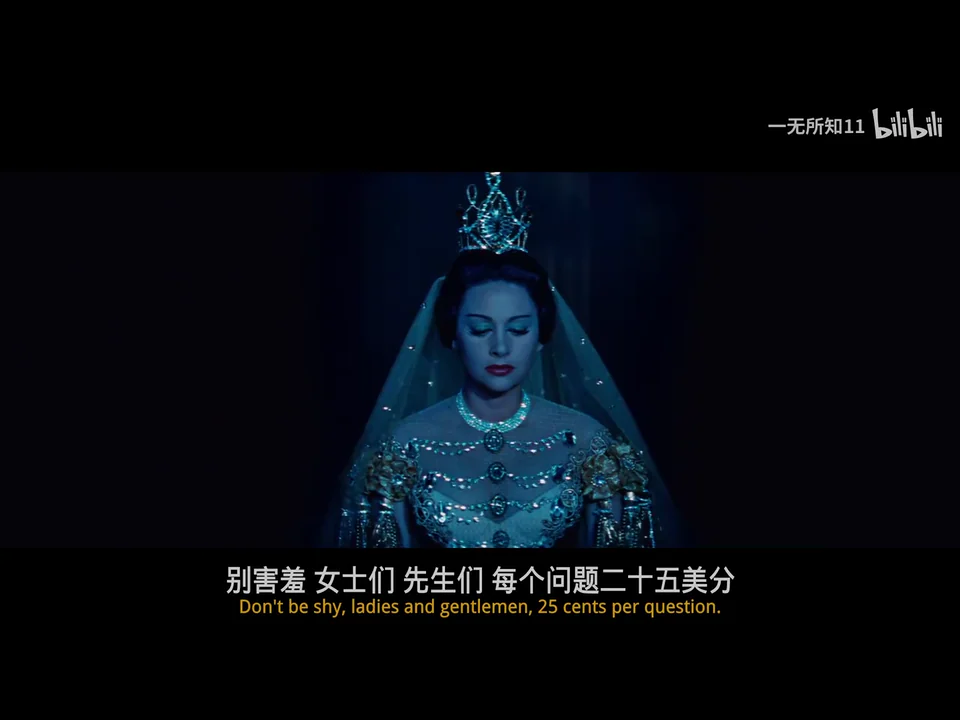 00:07:00
Her life is enclosed in the circus present as a repeatable, chargeable public exhibit.
VISIBLELola remains frontally still in an isolated pool of light while the surrounding stage falls into darkness.
AUDIBLEThe ringmaster directly solicits audience questions and announces a charge of twenty-five cents for each one.
SITE ANALYSISThe circus present repeatedly recalls and prices Lola's past, making actual performance and virtual life feed one another in a closed circuit.
Cinema 2, chapter 4, pp. 68–87.Bilibili at 00:07:00 Bilibili · Lola Montès complete film · verified 2026-08-14The circus present turns Lola's past into virtual images that can be exhibited repeatedly; each flashback in turn changes the meaning of the body onstage, forming a perfect crystal of reciprocal actual-virtual exchange.
Atlas analysis · evidence classification unrecorded.- 01The present is staged as a closed ring
The ringmaster presents 'the life of Lola Montès' in a circular circus; spectators surround the central platform as lights, rails, and questions fix Lola's body as an exhibit.
The actual present is no neutral narrative point but an apparatus that produces, prices, and encloses the past. - 02The past rewrites the performance
Questions and circus acts summon episodes with Liszt, Ludwig I, and others; movements, colours, and gestures from the flashbacks return to become the next performance.
The circus actualizes a virtual past, while that past shapes the actual performance; the two sides exchange along one circuit. - 03Every exit returns to exhibition
At the end Lola sits behind bars and extends her hand as spectators queue and pay to kiss it; the camera recedes while the line keeps lengthening.
A life is preserved as an endlessly repeatable present; the crystal's perfection is also the enclosure from which the figure cannot escape.
Marrati pp. 86–101 · site test
F for Fake
F for Fake · 1973 · Orson Welles / 奥逊·威尔斯This site tests the film's chain of authentication through Marrati's direct time and crisis of truth. It does not equate true/false with actual/virtual, but follows authority as it migrates among author, forger, expert, editor, and spectator.
When does the promise that everything for one hour is true cease to hold? How does the Picasso story continue producing effects of truth without a final authenticator?
The powers of the false do not hide truth more deeply; they put speaking positions and rules of judgment themselves into variation.
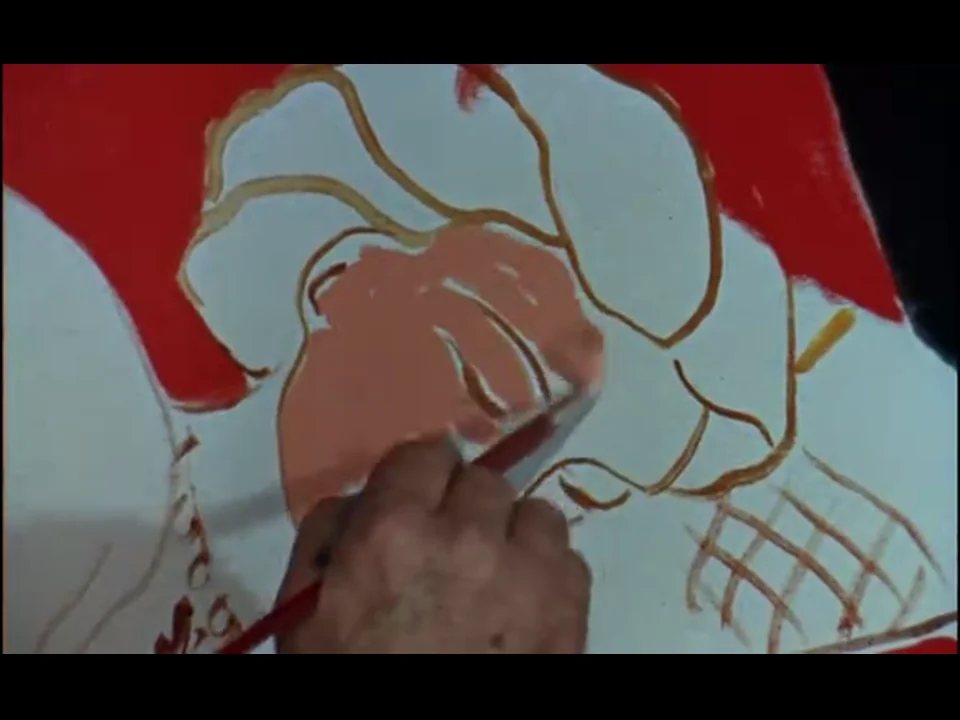 00:25:30
The act of imitation does not finish the authentication chain. Experts, museums, and dealers determine under whose name the image circulates.
VISIBLEClose shots follow hand and brush tracing lines, then cut among Elmyr, reproductions, and the studio.
AUDIBLEElmyr says that to resemble Matisse he must deliberately make his line appear hesitant.
SITE ANALYSISAuthenticity is no longer settled inside the image. The painter imitates style, experts assign names, institutions price the object, and Welles's editing rewrites every authority; authentication keeps moving through the series.
Cinema 2, chapter 6, English translation p. 150; atlas shot analysis.Bilibili at 00:25:30 Bilibili full-film upload · 发呆的海绵宝宝 · verified 2026-08-14Editing lets forger, expert, market, and director take turns holding authority, until even the position that exposes deception enters the series of falsifiers.
Atlas analysis · evidence classification unrecorded.- 01The director signs a temporal contract
With magic tricks, editing table, and direct address, Welles promises that the next hour will be true.
Truth is not an external standard; it is established as a speech act the filmmaker can manipulate. - 02Authority keeps changing hands
Elmyr's paintings, Irving's biography, expert certificates, museums, and the art market authenticate and undo one another.
Original and fake can no longer be separated by a final tribunal; the judge becomes another figure in the series. - 03Exposure keeps producing truth-effects
Welles admits that the Oja-Picasso story is invented, yet it has already organized looking, desire, and authorship.
The false no longer merely conceals fact; it shows how narration produces truths that circulate.
Marrati pp. 74–101 · site test
India Song
India Song · 1975 · Marguerite Duras / 玛格丽特·杜拉斯This site carries the criteria of broken action and direct time into audiovisual separation: empty rooms, absent bodies, and offscreen voices each maintain a series no longer related as illustration and illustrated object.
When voices speak of characters after visible space has emptied, can the spectator still pin those voices back to one body and chronology?
Audiovisual disjunction is not failed synchronization; two autonomous series touch at their limits, making incommensurability itself a new relation.
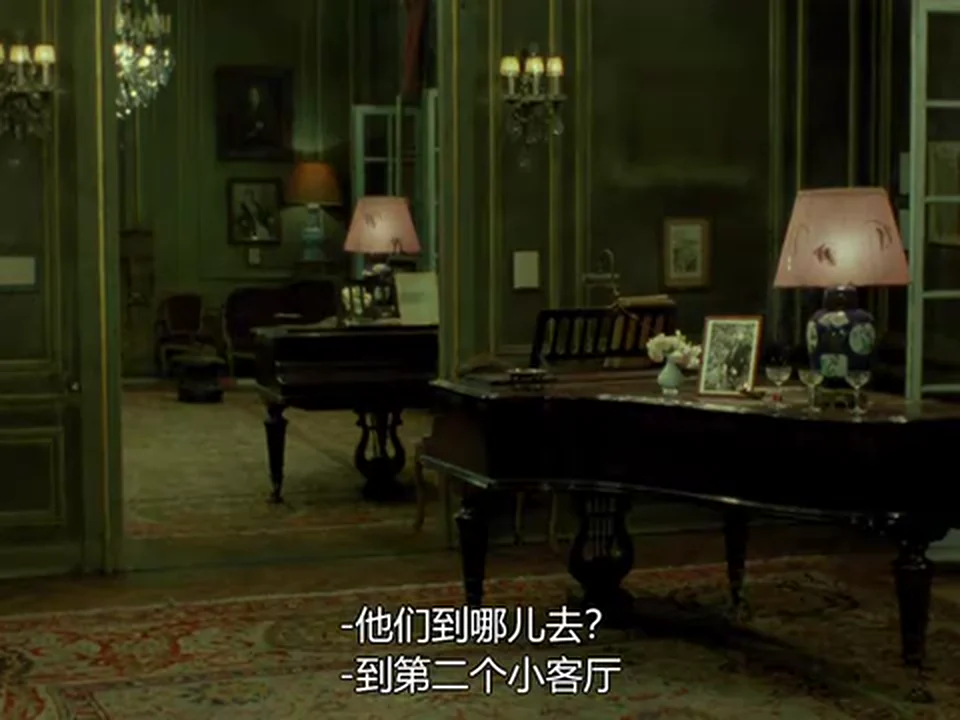 第9分段 00:48
Voices ask where the figures have gone while the image holds on an empty salon. The event remains in sound; the present space remains visible.
VISIBLETwo connected salons show pianos, lamps, mirrors, and framed photographs; no person enters the image.
AUDIBLETwo off-screen voices ask where the figures went and answer that they moved to the second salon.
SITE ANALYSISSound preserves relations and an event already underway while the empty rooms form another present. Sound and image do not complete each other; they remain autonomous series meeting at absence.
Cinema 2, chapters 7 and 9; atlas shot analysis.Bilibili at 第9分段 00:48 Bilibili complete 20-part upload · 忆君夕阳时 · verified 2026-08-14Bodies in empty rooms and absent voices each preserve a film of their own, exchanging the pressure of an absent event only across the interval.
Atlas analysis · evidence classification unrecorded.- 01Bodies refuse to perform the voices
Slow walking, leaning, and dancing in the ballroom do not lip-sync with off-screen memories, names, and social conversation.
Voice ceases to be an attribute of the body, and visual attitude no longer explains the speaker. - 02The unseen occupies the sound field
The beggar woman's song, embassy memories, and the vice-consul's cries cross mirrors, empty halls, and heat without receiving matching event-images.
Absence is not an informational blank but an autonomous temporal layer preserved by sound. - 03Two images reach their limits
Mirrors, corridors, empty halls, and still attitudes drain visible action while voices repeatedly approach a catastrophe that is never reconstructed.
The irrational audio-visual cut makes the spectator read the distance rather than pair the two tracks again.
Marrati pp. 95–101 · site test
Muriel
Muriel ou Le Temps d’un retour · 1963 · Alain Resnais / 阿伦·雷乃This site extends Marrati's criterion of sheets of past to memory of the Algerian War: 8mm footage, torture narration, and the apartment present cut into one another without composing a past that can be fully restored.
What visible facts does the amateur footage provide? How does Bernard's narration redistribute an apparently ordinary present through a violent past that remains unseen?
Sheets of past are not archival drawers leading to one truth; the choice of which sheet to enter already changes relations among present bodies and spaces.
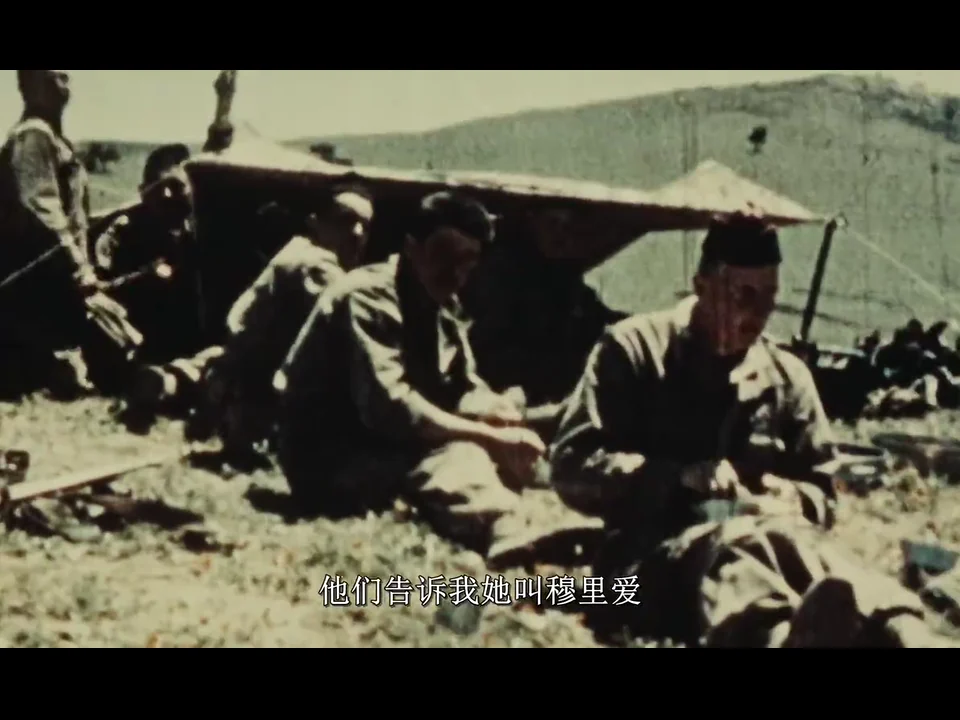 第11分段 00:00:25 / Part 11 00:00:25
The routine soldiers' footage does not show torture; Bernard's present voice presses the absent event into the image.
VISIBLEThe 8mm footage shows soldiers sitting and resting in the hills; it does not show the torture Bernard describes.
AUDIBLEOver 8mm images without synchronized location sound, Bernard's present voice names Muriel and continues his account.
SITE ANALYSISThe wartime past is neither fully restored by the footage nor contained in speech; the split between routine images and torture testimony makes the past act in the present as an untotalizable sheet.
Cinema 2, chapter 5, pp. 116, 118, 120, 122–123; these are film-level primary-text coordinates, while the present shot relation is this site's analysis.Bilibili at 第11分段 00:00:25 / Part 11 00:00:25 Bilibili · Muriel, part 11 · verified 2026-08-14Muriel keeps the wartime past fractured across short shots, rooms, and repeated speech; the present cannot assemble them into one completed memory and must continue under their pressure.
Atlas analysis · evidence classification unrecorded.- 01Everyday surfaces cover the wartime sheet
Apartment arrangement, furniture movement, and walks by the sea form a present of continuous action, while Algerian fragments intrude as abrupt short shots.
The past is not explanatory background but a coexisting sheet that can alter the present's rhythm; Cinema 2, ch. 5, pp. 116, 118, 120, and 122–123 are film-level primary coordinates, while the present shot mechanism is this site's analysis. - 02Repetition mutates rather than completes
The same wartime word, photograph, and bodily attitude recur in different rooms, each time with one less piece of confirmable causality.
Repetition presses the sheet back onto the present without becoming a complete flashback; the spectator must read how absence organizes responsibility. - 03Fragments become ethical pressure
Bernard's silence, Hélène's arrangements, and Alphonse's return never reduce Muriel to a solvable case.
Read beside Hiroshima mon amour, private and wartime pasts remain incommensurable; the audio-visual gap becomes a lectosign rather than an information deficit.
Marrati pp. 95–101 · site test
The Immortal Story
Histoire immortelle · 1968 · Orson Welles / 奥逊·威尔斯This site rereads the paid reenactment through Marrati's criterion of actualization, with Cinema 2, chapter 4, p. 76 as a primary return point: once the legend is arranged as reality, its performers do not remain instruments outside the story.
A merchant pays to purchase a story he has already heard. Once sailor and woman actually inhabit their roles, who still controls the legend's outcome?
Actualization does not add an exterior shell to a virtual script; it changes participants' capacities, desires, and relations so that the original plan cannot simply reclaim the event.
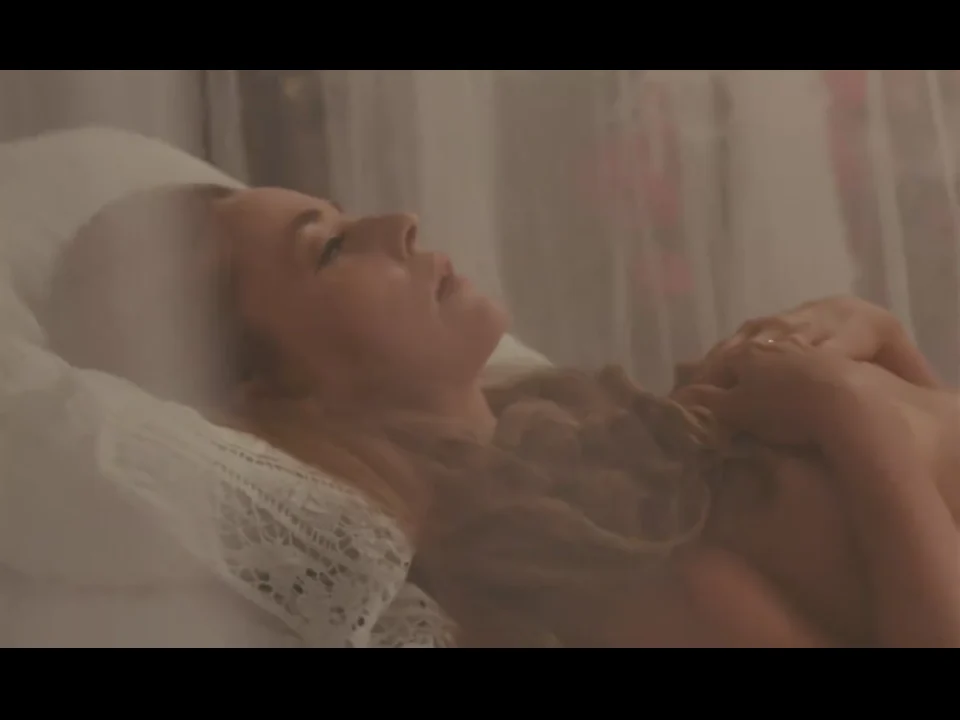 00:40:00
Clay's arranged story has occurred, yet the two hired performers form a relation beyond the commission.
VISIBLEThe sailor and Virginie lie side by side beneath the canopy; neither Clay nor his secretary is in the frame.
AUDIBLEClay's immediate instructions have left the sound field; quiet voices and pauses remain between the two hired performers.
SITE ANALYSISClay tries to make the legend obey a prior model, but the hired performers produce a new relation in carrying it out; fiction shifts from copying an old story to making a consequence its arranger cannot reclaim.
Cinema 2, chapter 4, p. 76; chapter 6, pp. 126–155.Bilibili at 00:40:00 Bilibili · The Immortal Story complete film · verified 2026-08-14Marrati pp. 114–118 · site test
Black God, White Devil
Deus e o Diabo na Terra do Sol · 1964 · Glauber Rocha / 格劳贝尔·罗恰This site returns Marrati's criteria of belief in the world and a missing people to the Brazilian sertão, with Cinema 2, chapter 8, pp. 222–223 as a primary return point: prophet and bandit each attempt to occupy the position of speaking for 'the people.'
How do religious leader and bandit compete for bodies and collective authority to speak? Why does the final run refuse to cash the unseen sea out as an image of victory?
A people to come is not a pre-existing national essence; the run preserves the people as a position still to be made through new speech, bodies, and relations.
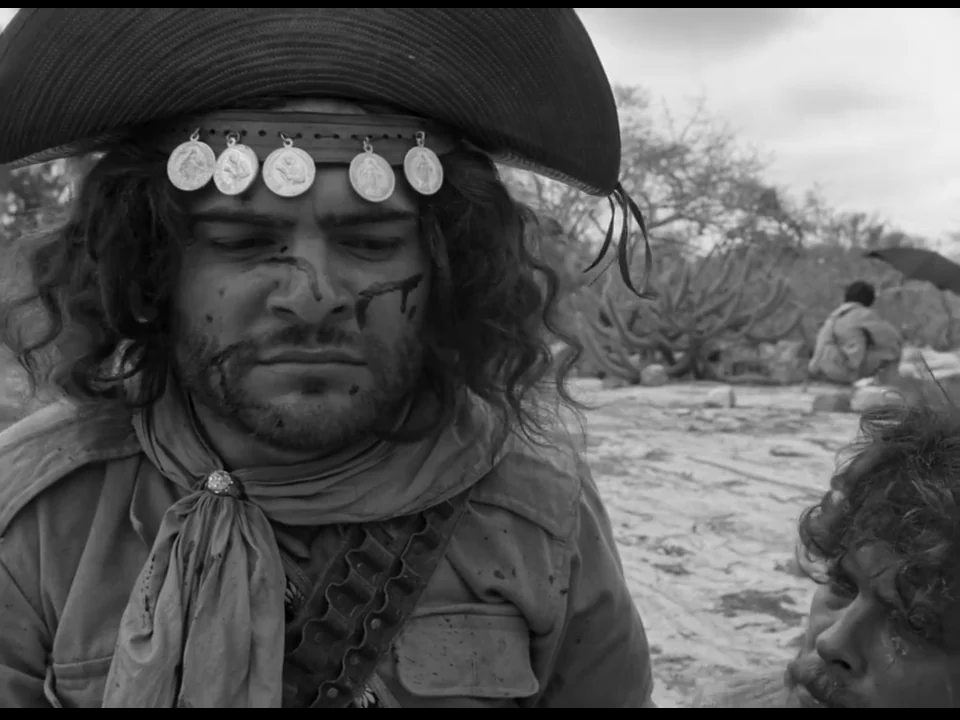 01:30:00
Bandit, mythical figure, and speaker are compressed into one face while allegiance remains in motion through speech.
VISIBLECorisco's coin-hung hat, facial streaks, and frontal close-up bind costume, body, and mythical identity.
AUDIBLECorisco challenges Manuel in loud, rhythmic speech closer to public performance than private conversation.
SITE ANALYSISFigures change allegiance among peasant, believer, bandit, and myth; the collective is not pre-completed, and Corisco's performative speech turns that absence into a condition of creation.
Cinema 2, chapter 8, pp. 222–223.Bilibili at 01:30:00 Bilibili · Black God, White Devil complete film · verified 2026-08-14Drought, trance, song, and changing leaders prevent a people from being represented by one myth; it remains unfinished through flight and narration.
Atlas analysis · evidence classification unrecorded.- 01The land first closes action
Cracked sertão, dead cattle, debt, and the landowner's whip compress Manuel's labour into killing and flight.
Action does not improve the milieu; it drives the body from one apparatus of domination to another. - 02Myths contest the body
Sebastião's rites and Corisco's cangaceiro performance use song, dance, blades, guns, and trance to demand absolute allegiance.
A people is not completed in its leaders; bodily attitudes expose how myth produces and exhausts collectivity. - 03Running gives the conclusion to the future
After the leaders die, Manuel and Rosa keep running across open land while song declares that the sertão will become sea.
The image does not show a people already present; the speech act preserves transformation as a relation still to come.
WORKING GLOSSARY / 18 TERMS
From movement-image to belief in the world
Each term separates definition, argumentative use, and boundary; locators mark where Marrati develops it.
images en mouvement / images in movement
Images in movement
Objects move within a fixed frontal space, so movement remains attached to identifiable carriers.
- USE
- It supplies the contrast for movement-image: first determine whether objects move within the frame or whether the shot and spatial relations themselves move.
- SITE BOUNDARY TEST
- Movement inside a frame does not by itself constitute a movement-image.
image-mouvement / movement-image
Movement-image
Movement leaves a single moving body; the shot as mobile section changes the positions of parts while expressing qualitative change in the Whole.
- USE
- Connects frame, shot, and montage within one problem of movement.
- SITE BOUNDARY TEST
- Deleuze coins the term. Bergson supplies the problem-material but does not formulate a cinematic theory of the movement-image.
image-temps / time-image
Time-image
Time no longer remains subordinate to the normal measure of movement: aberrant movement exposes and breaks that subordination, while crystalline circuits, sheets of past, and peaks of present form distinct images of direct time.
- USE
- Explains how modern cinema connects a break in sensory-motor linkage to memory and thought.
- SITE BOUNDARY TEST
- Nonlinear narrative, slowness, and static shots are not sufficient conditions.
coupe mobile / mobile section
Mobile section
Movement changes spatial positions within a closed set while linking that set to the continuously changing Open Whole.
- USE
- Recasts the shot from a spatial scale into a temporal perspective that joins framing to montage.
- SITE BOUNDARY TEST
- It differs from an immobile section extracted from movement; movement is not produced by summing static positions.
durée / duration
Duration
Duration is time as continuous qualitative change and production of the new, not the external ordering of events on a homogeneous axis.
- USE
- Links spatial displacement to change in the Whole and supplies the temporal dimension in which virtual past is preserved.
- SITE BOUNDARY TEST
- Duration is not subjective felt length; Marrati stresses Bergson's move from psychology to an ontological field.
plan d’immanence / plane of immanence
Plane of immanence
Marrati establishes a genealogy between Bergson's plane of image, movement, and matter and Deleuze's later plane of immanence: the former changes how the latter can be constructed, but the two are not identical concepts.
- USE
- Connects the image-universe of Matter and Memory to the plane of thought in What Is Philosophy? while preserving their different textual contexts and philosophical functions.
- SITE BOUNDARY TEST
- Genealogy is not identity, and immanence does not endorse the status quo; it demands resistance to opinion and the creation of new relations.
univers acentré / acentred universe
Acentred universe
All images act and react upon one another without a prior viewpoint, fixed coordinates, or subject–object division.
- USE
- Provides an ontological entry for mobile camera, variable angles, and perception not centred on a character.
- SITE BOUNDARY TEST
- Acentred does not mean a film lacks local viewpoints; local centres arise within the field without ontological privilege.
centre d’indétermination / centre of indetermination
Centre of indetermination
A living image inserts an interval between stimulus and response, making selective and novel action possible.
- USE
- Explains how a subject forms within the image-field instead of pre-existing it.
- SITE BOUNDARY TEST
- Indetermination is not arbitrary freedom; bodily capacity, need, and situation still constrain selection.
image-perception / perception-image
Perception-image
A living image subtracts from universal interaction what does not concern its action, retaining useful aspects of things.
- USE
- Analyses perception as framing, selection, and practical interest rather than transparent vision.
- SITE BOUNDARY TEST
- The perception-image does not copy a complete thing; subjective perception forms precisely by perceiving less.
image-affection / affection-image
Affection-image
Movement not converted into a known object or external action becomes pure quality and expression in the interval between perception and action.
image-action / action-image
Action-image
Perception identifies effective features in a situation, and a character responds through action that transforms it.
- USE
- Organizes classical realism, the large form, duel, and belief in universal history.
- SITE BOUNDARY TEST
- Classical cinema is not made only of action-images; Vertov's perceptual montage and Dreyer's affective montage are internal counterexamples.
schème sensori-moteur / sensory-motor schema
Sensory-motor schema
Perception, affection, and action form a continuous organization of what can be used, answered, and changed.
- USE
- It explains the force of classical action cinema and locates the precise connection broken in postwar cinema.
- SITE BOUNDARY TEST
- A moving character does not prove that the schema remains intact; the test is whether perception generates action adequate to the situation.
image indirecte du temps / indirect image of time
Indirect image of time
Time does not appear directly within one image but is composed through the order, rhythm, opposition, and convergence of movement-images.
- USE
- Distinguishes Griffith's empirical organic composition from Eisenstein's dialectical construction, whose organic spiral develops through pathetic qualitative leaps; both remain within an indirect regime of time.
- SITE BOUNDARY TEST
- Indirect does not mean inferior; Marrati refuses to rank classical cinema aesthetically below the time-image.
situations optiques et sonores pures / pure optical and sound situations
Pure optical and sound situations
What is seen and heard no longer leads naturally to action, and the character becomes a seer unable to absorb the situation through existing schemas.
- USE
- Frees images from practical perception so that they can connect with time, memory, and thought.
- SITE BOUNDARY TEST
- Stillness, slowness, and empty shots are only possible configurations; the new connection must be identifiable in the image.
espace quelconque / any-space-whatever
Any-space-whatever
Space loses fixed function and fitness for action; established relations disconnect, leaving other combinations possible.
- USE
- Analyses how ruins, reconstructed cities, empty places, and weak event-links alter the logic of action.
- SITE BOUNDARY TEST
- Whatever does not mean an arbitrary location; it names the dissolution and recomposability of established spatial relations.
actuel / virtuel · actual / virtual
Actual / virtual
An actual image can exchange with the virtual image strictly contemporaneous with it; pure past and sheets of past explain how the past preserves itself. The structures are related, but virtual image, recollection, and past are not synonyms.
- USE
- First distinguish actual-virtual exchange, then determine whether the analysis concerns a crystalline circuit, sheets of past, or peaks of present.
image-cristal / crystal-image
Crystal-image
An actual image and the virtual image strictly contemporaneous with it form the smallest circuit; they remain different in kind yet lose stable assignability through exchange. Sheets of past and peaks of present are other configurations of direct time.
- USE
- Shows time splitting at every instant into a passing present and a preserved past.
- SITE BOUNDARY TEST
- Mirrors, flashbacks, and dreams are not sufficient; reciprocal exchange and indiscernibility are the test.
croyance au monde / belief in the world
Belief in the world
After the old organic human–world relation breaks, belief addresses the new relations and modes of life that can still be created in this world.
- USE
- Moves modern cinema from exposing the intolerable to rebuilding possibilities of seeing, choice, collectivity, and life.
- SITE BOUNDARY TEST
- It is neither religious dogma, optimistic guarantee, nor approval of the present; it begins from broken relation and the intolerable.
Marrati and Deleuze: comparing arguments
Marks the book's summaries, arguments, and interpretations.
Provides a route back to Cinema 1, Cinema 2, and related primary texts; each still requires direct checking.
Connects Bergson, Spinoza, and other texts without attributing the synthesis to Marrati.
Turns theory into a checkable reading or shot-level criterion.
Cinema-specific concepts: encounter is not application
- MARRATI STUDY
- Cinema thinks autonomously in images; philosophy encounters it only by creating concepts tailored to cinematic experience.
- DELEUZE AND RELATED PRIMARY-TEXT ENTRY
- Primary-text entry: the preface to Cinema 1, the end of Cinema 2, and concept creation in What Is Philosophy?
- CROSS-TEXT SYNTHESIS
- Bogue reconstructs taxonomic transitions and Rodowick stresses time and resistance; Marrati asks further how cinema changes philosophy itself.
- SITE ANALYSIS
- Would removing the concept actually weaken the shot or sound analysis? If it works unchanged for any object, it is not yet cinema-specific.
Movement is not object displacement: the shot as mobile section
- MARRATI STUDY
- Marrati links Bergson's three theses on movement, the open whole, frame, out-of-field, and shot into a genesis of the movement-image.
- DELEUZE AND RELATED PRIMARY-TEXT ENTRY
- Primary-text entry: the opening theses on movement and the frame/shot chapters of Cinema 1, cited through Marrati.
- CROSS-TEXT SYNTHESIS
- Bergsonism distinguishes duration from spatialization; Xu Hui's vitalist guide supplements how movement becomes genesis rather than displacement.
- SITE ANALYSIS
- Record object displacement, camera movement, editorial jumps, and qualitative change in the whole separately; do not call every moving picture a movement-image.
Perception subtracts: the subject emerges within the image-field
- MARRATI STUDY
- Image, movement, matter, and light compose an acentred field; living images generate subjectivity through selection, delay, and affect.
- DELEUZE AND RELATED PRIMARY-TEXT ENTRY
- Primary-text entry: the three variants of the movement-image in Cinema 1 and chapter one of Bergson's Matter and Memory.
- CROSS-TEXT SYNTHESIS
- Marks and Shaviro begin from embodied, haptic, or affected viewing; Marrati first explains perception's genesis on a nonhuman image-plane, so the approaches cannot be collapsed into one bodily theory.
- SITE ANALYSIS
- Ask what the shot subtracts and retains, which action-interest organizes selection, and whether the camera establishes impersonal perception.
Montage, action, and universal history
- MARRATI STUDY
- The differences between Griffith and Eisenstein rest on a shared substrate: organic whole, primacy of action, and belief that a people can become history's subject.
- DELEUZE AND RELATED PRIMARY-TEXT ENTRY
- Primary-text entry: montage and the large form of the action-image in Cinema 1, plus the image/utterance critique in Cinema 2.
- CROSS-TEXT SYNTHESIS
- Reading this beside the site's Griffith, Eisenstein, Vertov, and Dreyer matrix and Bogue's taxonomy exposes differences within the classical regime.
- SITE ANALYSIS
- Diagram S–A–S′—situation, cues, action, transformed situation—then test whether time appears only indirectly through convergence, opposition, and whole.
The postwar break: pure optical-sound situations are not simply slow
- MARRATI STUDY
- Rossellini and Antonioni break action-linkage, turn characters into seers, and detach space from fixed use; surface tempo is not the criterion.
- DELEUZE AND RELATED PRIMARY-TEXT ENTRY
- Primary-text entry: the crisis of the action-image in Cinema 1 and chapter one of Cinema 2, cited through Marrati.
- CROSS-TEXT SYNTHESIS
- This can be read with Rodowick's classical/modern temporal divide and the site's neorealist, Ozu, and Antonioni scene evidence.
- SITE ANALYSIS
- Can the character turn what is seen and heard into an action adequate to the situation? If not, does the new link enter memory, dream, thought, audiovisual separation, or emptiness?
The crystal is not a mirror: the minimal actual–virtual circuit
- MARRATI STUDY
- Attentive circuits, a virtual past strictly coexisting with the present, and pure memory make the crystal a temporal structure rather than a visual ornament.
- DELEUZE AND RELATED PRIMARY-TEXT ENTRY
- Primary-text entry: direct time and crystal chapters in Cinema 2, plus memory circuits in Bergson's Matter and Memory.
- CROSS-TEXT SYNTHESIS
- Rodowick gives greater weight to powers of the false; Marrati insists that Bergson's virtual past remains structurally central to Cinema 2.
- SITE ANALYSIS
- Mark actual and virtual layers separately and prove that they coexist, remain distinct, and exchange; a mirror, flashback, or dream alone is insufficient.
Belief in the world: not optimism but renewed relation
- MARRATI STUDY
- After historical purpose, a unified people, and belief in action break down, modern cinema must still create new relations and modes of life in this world.
- DELEUZE AND RELATED PRIMARY-TEXT ENTRY
- Primary-text entry: 'thought and cinema' in Cinema 2 and the plane of immanence in What Is Philosophy?
- CROSS-TEXT SYNTHESIS
- Marks's intercultural world-relations and Shaviro's affected body supplement this ethical line, but affective intensity cannot replace actual reconstruction of relation.
- SITE ANALYSIS
- Does the film merely expose the intolerable, or create a minimal new relation—seeing, listening, care, common action, or a new use of space?
Cinema changes immanence: thought no longer begins from one presupposed image
- MARRATI STUDY
- Marrati argues that cinema brings Bergson into Deleuze's lineage of immanence and forces him to reopen how thought begins. An image of thought is not a mental picture but a presupposed structure for recognizing truth, assigning direction, and distributing capacities.
- DELEUZE AND RELATED PRIMARY-TEXT ENTRY
- Primary-text entry: chapter three of Difference and Repetition, the plane of immanence in What Is Philosophy?, and both Cinema books.
- CROSS-TEXT SYNTHESIS
- This creates a higher-level complement among guides: Bogue explains taxonomy, Rodowick time and force, and Marrati how cinema rewrites philosophy.
- SITE ANALYSIS
- State three levels: the sensible relation created by a film, the concept created by Deleuze, and Marrati's reconstruction of Deleuze's trajectory. Never let one speak under another's name.
BOOK → PRIMARY TEXT → SHOT SEQUENCE → LIMIT
Three argument loops: every claim can be checked in both directions
A single frame locates a fact; a relation requires a sequence. Each loop begins from Marrati's pages, returns to a Deleuze chapter, passes through time-ordered shots, and states what evidence would limit the reading.
If movements still finish, why has action already failed?
The postwar break must be demonstrated as a relation: characters can complete local movements from what they see and hear, yet those acts cannot treat the situation, assume its consequences, or open a next step.
MARRATI PAGES
PRIMARY-TEXT COORDINATES
- Cinema 1, chapter 12
The crisis of the action-image: wandering, cliché, and loosened relations.
Edition source - Cinema 2, chapter 1
Pure optical-sound situations and the seer.
Edition source
Germany Year Zero
The poisoning is physically completed, the teacher then refuses responsibility for his instruction, and final walking, looking, and climbing continue without composing a plan of repair.
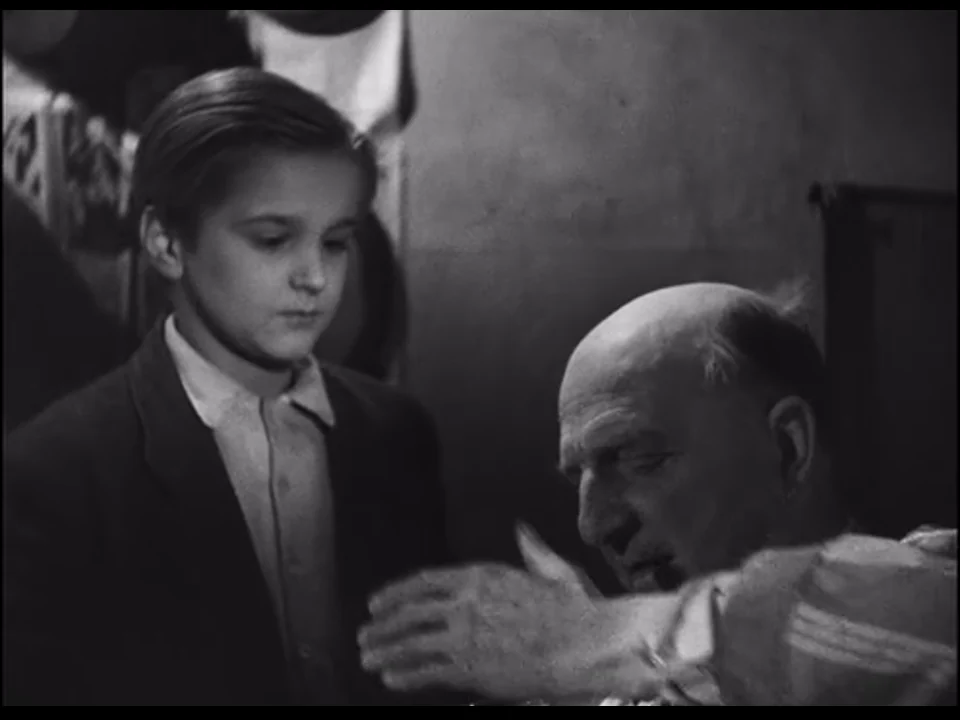
VISIBLE Edmund moves between table and bed, places powder in a drink, and the father later drinks from the glass.
AUDIBLE Low German conversation is heard in the room, along with small sounds of glassware and tableware; music supplies no triumphant closure to the act.
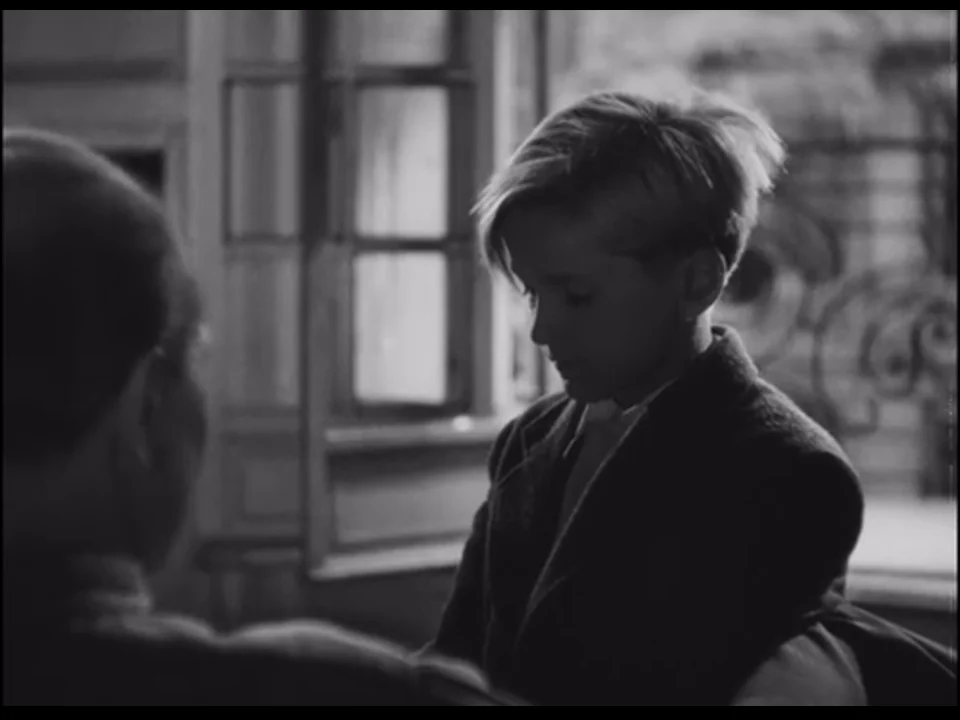
VISIBLE Neatly dressed in a dark jacket, Edmund stands before the teacher, first lowering his head and then retreating under the teacher's agitated gestures and speech.
AUDIBLE The German argument sharply intensifies as the teacher rebukes him continuously; Edmund's voice is quieter and brief.
VISIBLE Edmund crosses streets and broken walls alone, pauses outside a church, and enters a building without intact walls.
AUDIBLE The long passage is formed mainly by sustained orchestral music, traffic, distant children's voices, and urban ambience; Edmund speaks almost no dialogue.
Journey to Italy
The technical operation at Pompeii successfully reveals two bodies yet suspends marital action; reunion in the procession occurs without turning what was seen into a completed solution.
VISIBLE Workers use trowels, brushes, and hands to remove volcanic material; pale plaster gradually exposes a head, teeth, arms, and legs against dark soil.
AUDIBLE The on-site commentary explains how plaster fills the cavity left after a body disintegrates and successively identifies legs, arms, skull, and teeth.
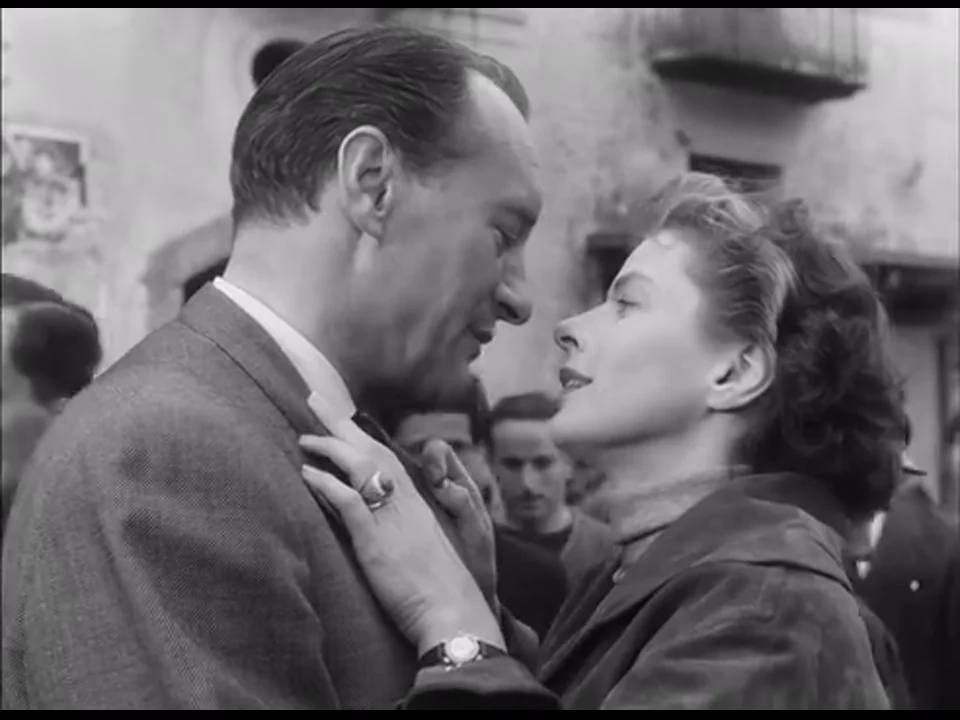
VISIBLE A religious procession stops the car; after the couple get out, ranks, band, sacred image, and spectators keep crossing the frame around them.
AUDIBLE Band music, bells, prayer, cheering, and repeated cries of 'miracle' fill the street.
Time already presses into the shot—but is the crystal actually formed?
Direct time and crystal are not synonyms. A shot may preserve coexisting history, echo, and pressure of death; it becomes crystalline only when actual and contemporaneous virtual remain distinct while exchanging positions.
MARRATI PAGES
PRIMARY-TEXT COORDINATES
- Cinema 2, chapter 4
The smallest actual-virtual circuit and crystals of time.
Edition source - Cinema 2, chapter 5
Distinct direct-time forms of sheets of past and peaks of present.
Edition source
Journey to Italy
Museum colossi, the echo of the Sibyl's chamber, and anonymous skulls repeatedly let the past act upon Katherine's present; all three show historical pressure entering current perception.
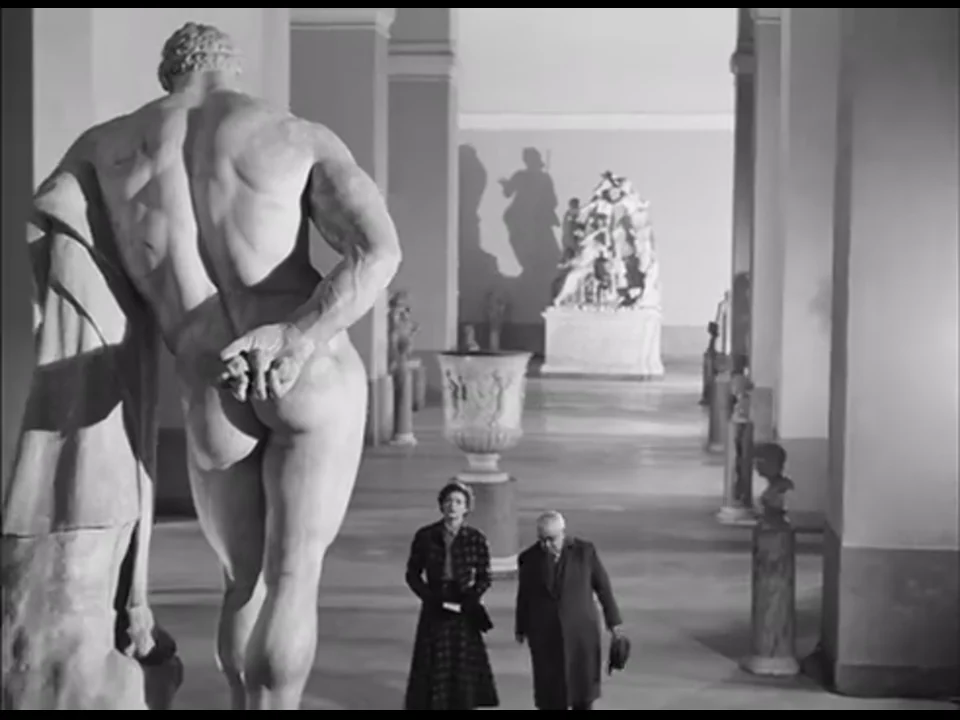
VISIBLE Katherine follows a guide through the galleries as dancers, a satyr, the drunken faun, imperial heads, and monumental nudes successively occupy the image.
AUDIBLE The guide continuously names works, excavation sites, and biographical anecdotes in English; his voice repeatedly carries over close views of the statues.
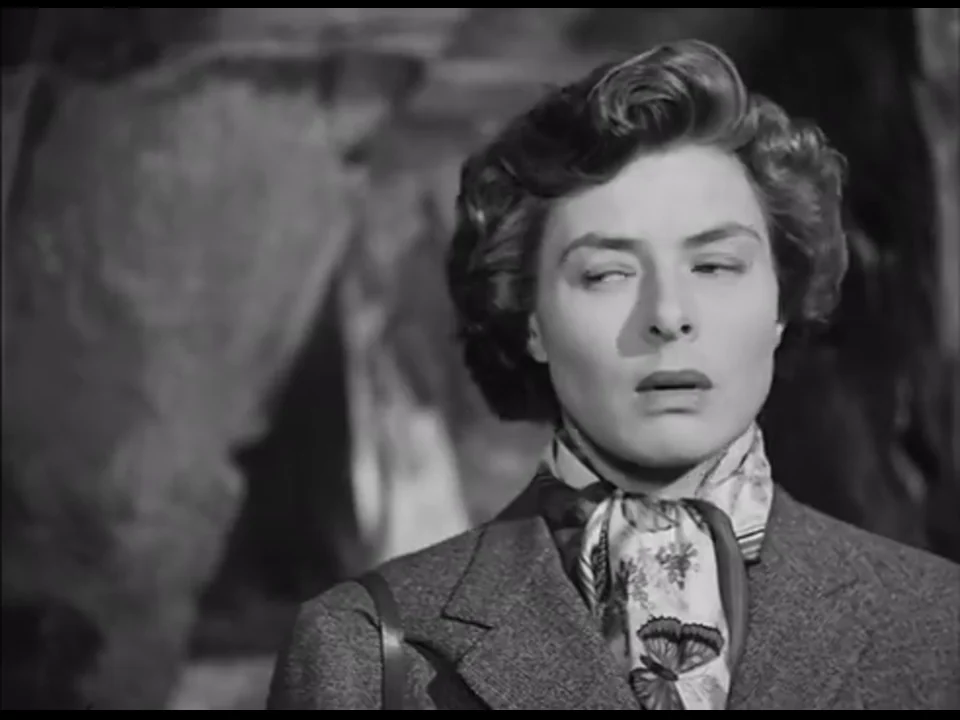
VISIBLE A guide leads Katherine into a high, narrowing trapezoidal passage; their bodies diminish in depth while stone walls dominate the frame.
AUDIBLE The guide asks her to listen to the echo and calls out; the call returns from the stone chamber.
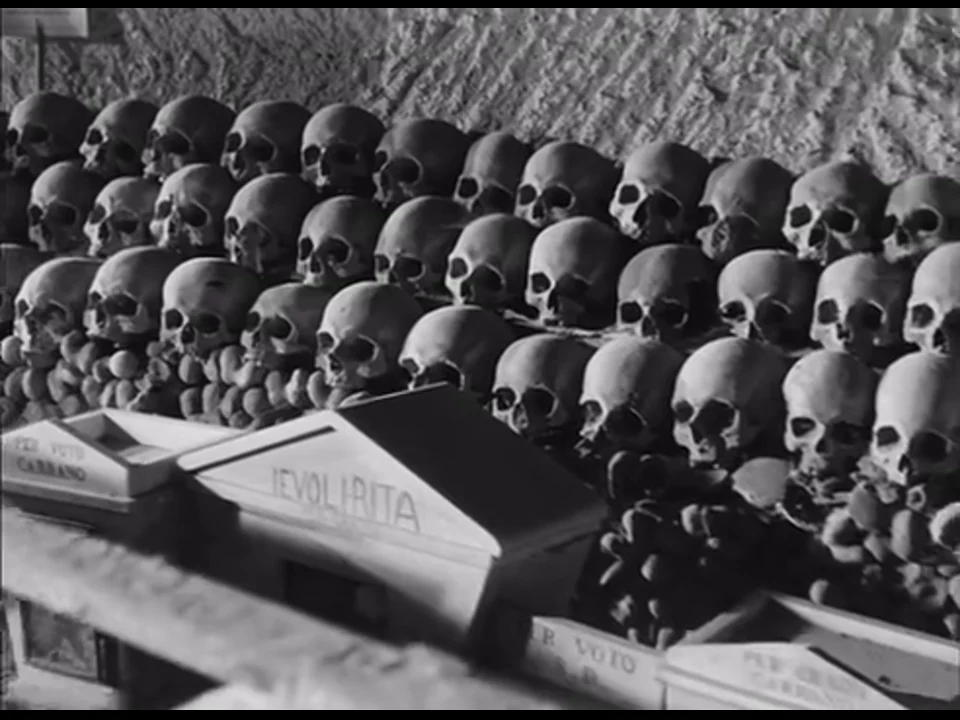
VISIBLE Katherine and Natalia enter a dark cavern where skulls, long bones, devotional boxes, flowers, and candles line the walls.
AUDIBLE Footsteps, low prayer, and cavern reverberation reduce the volume of ordinary conversation.
How does an utterance pass through matter and become common action?
Belief in the world is not verbal hope. Speech remakes a broken world-relation only when it changes participants, resources, roles, labour, or authority to speak.
MARRATI PAGES
PRIMARY-TEXT COORDINATES
- Cinema 2, chapter 6
Perrault, fabulation, intercessors, and the joint invention of a people.
Edition source - Cinema 2, chapter 8
Collective enunciation, a missing people, and modern political cinema.
Edition source
Pour la suite du monde
Riverside discussion organizes memory as a plan, explanation to islanders recruits participants, driving posts subjects the plan to tide and labour, and final delegation specifies who may speak for the collective.
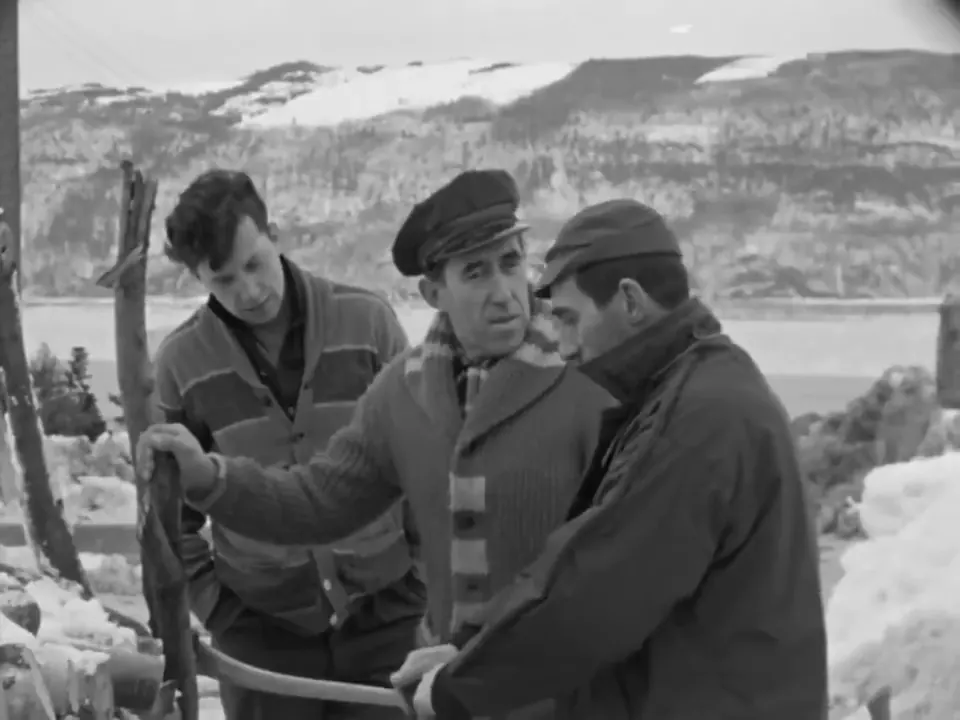
VISIBLE Three island men confer above the river; one handles a wooden post or tool. The hunt concerns the beluga, locally called marsouin blanc.
AUDIBLE French location dialogue discusses preparations still to be made; the official player supplies English subtitles.
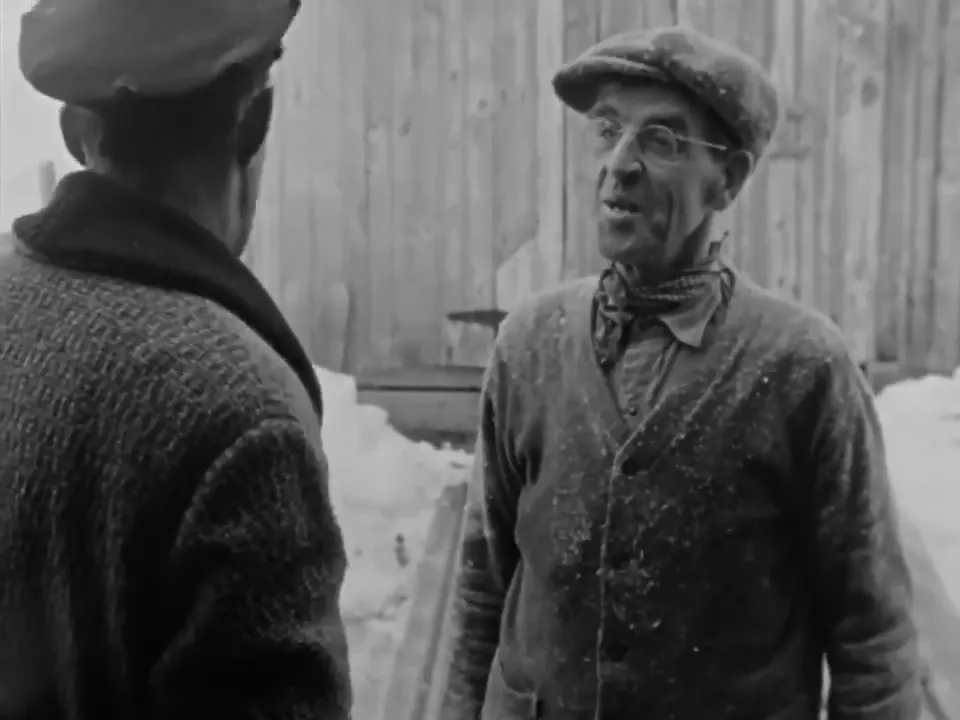
VISIBLE A man explains the project to two others outside a wooden building.
AUDIBLE The exchange frames the task as informing residents and drawing them into a collective intention.
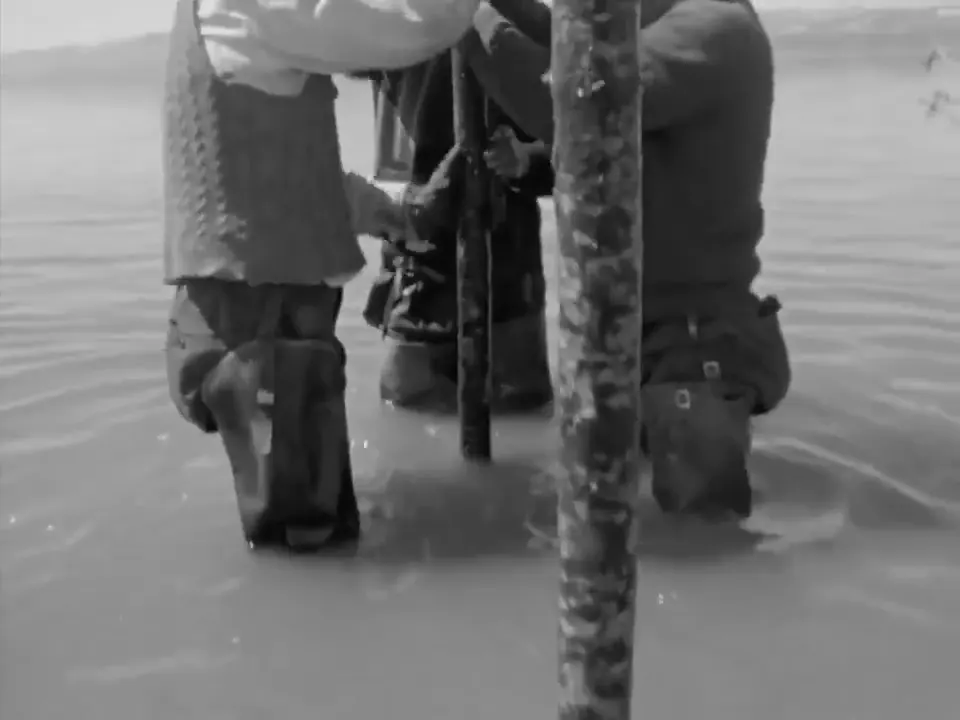
VISIBLE Several islanders stand knee-deep in the tide among rows of set posts, steadying and adjusting an upright post; the sequence turns to the water, post rows, and close views of hands.
AUDIBLE The dialogue discusses spacing posts about one pace (roughly three feet) apart, how water entering the boat impedes the work, and earlier labour in the water wearing leather boots.
VISIBLE Three men converse in an outdoor area of the aquarium; one occupies the position between the other two.
AUDIBLE The exchange explicitly delegates one participant to speak for the group.
SITE ANALYSIS / FIVE-STEP READING PATH
Read the introduction, six unnumbered units, and conclusion in five passes
Each pass identifies French-edition pages, a reading objective, and an analytical result.
- 01
Begin with encounter at the two ends
Why can cinema and philosophy truly meet while each remains autonomous?
pp. 7–12, 124–126 · OUTPUT a distinction between concepts of cinema and theories about cinema - 02
- 03
Read classical cinema through two montages
How do Griffith and Eisenstein produce time, action, and history through different logics of the whole?
pp. 60–73 · OUTPUT whole/part/action/time maps for two sequences - 04
Enter direct time through rupture
After the action schema fails, how do optical-sound images connect attention, memory, the virtual, and direct time?
pp. 74–101 · OUTPUT one seer case and one crystalline-circuit case - 05
Return cinema's problem to philosophy
Why is belief in the world not optimism, and how does cinema change immanence and the image of thought?
pp. 102–126 · OUTPUT a three-level conclusion separating primary text, Marrati's reconstruction, and site test
SOURCES / RIGHTS / ACCESS CONDITIONS
Editions, covers, sources, and access conditions
Find publication details, library records, and author information for this book and Deleuze's texts.
- 01
ORIGINAL EDITION 2003 French first edition
Paola Marrati, Gilles Deleuze: Cinéma et philosophie (PUF, 2003), ISBN 978-2-13-052443-4.All Marrati locators on this page use printed pages in this edition.Legitimate bookseller record/purchase; not OA. - 02
PUBLISHED TRANSLATION Alisa Hartz English translation
Paola Marrati, Gilles Deleuze: Cinema and Philosophy, trans. Alisa Hartz (Johns Hopkins University Press, 2008; paperback 2012).2008 hardcover ISBN 978-0-8018-8802-1; 2012 paperback ISBN 978-1-4214-0791-3. Added preface, appendix, notes, and index make its pagination non-interchangeable with the French edition.Publisher record/purchase; not OA. - 03
CATALOGUE / HOLDINGS English-edition DOI
DOI 10.56021/9780801888021.Persistent identifier for the English edition; a DOI does not imply open full text.Persistent bibliographic entry. - 04
INSTITUTIONAL PROFILE Author profile and three-language bibliography
Johns Hopkins University, Paola Marrati faculty profile.Confirms the French, Spanish, and English published editions and author identity.Public university profile. - 05
CATALOGUE / HOLDINGS English-edition holdings record
WorldCat OCLC 167512689.Confirms translator, year, and holdings; not a full-text download.Library discovery. - 06
ACCESS / ACQUISITION 2008 English-edition limited preview
Google Books, ISBN 978-0-8018-8802-1.Used to verify the English contents and cover without bypassing preview limits.Limited preview; not OA. - 07
CATALOGUE / HOLDINGS French first-edition union catalogue
CiNii Books, NCID BA63731194.Confirms ISBN, 127 numbered pages, and French-edition identity.Catalogue/holdings discovery. - 08
PUBLISHED TRANSLATION Emilio Bernini Spanish translation
Gilles Deleuze: Cine y filosofía, trans. Emilio Bernini (Nueva Visión, 2004), ISBN 978-950-602-481-9.Usually catalogued as 2004; some holdings give 2003, with later records under the same ISBN.University-library in-room access record; not online OA. - 09
PRIMARY EDITION Cinema 1: The Movement-Image, French primary edition
Gilles Deleuze, L’Image-mouvement. Cinéma 1 (Minuit, 1983).Primary return point for movement, shot, montage, perception, and action-image.Publisher record/purchase. - 10
PRIMARY EDITION Cinema 2: The Time-Image, French primary edition
Gilles Deleuze, L’Image-temps. Cinéma 2 (Minuit, 1985).Primary return point for optical-sound situations, crystal, belief in the world, and thought.Publisher record/purchase. - 11
CROSS-TEXT EDITION Bergsonism
Gilles Deleuze, Bergsonism (Zone Books, 1988).Cross-text entry for duration, the virtual, actualization, and multiplicity.Publisher record/purchase. - 12
PRIMARY EDITION Matter and Memory
Henri Bergson, Matière et mémoire: essai sur la relation du corps à l’esprit [1896], 5th ed. (PUF, Quadrige, 1997).The MM of Marrati's abbreviations; primary return point for subtractive perception, attentive circuits, pure memory, and the inverted cone.WorldCat bibliographic and holdings discovery. - 13
CROSS-TEXT EDITION Gilles Deleuze’s Time Machine
D. N. Rodowick, Gilles Deleuze’s Time Machine (Duke University Press, 1997).Cross-reading for semiotics, non-chronological time, and incommensurable relations in modern cinema; a unit-by-unit site guide is also available.Publisher record/purchase/library. - 14
CROSS-TEXT EDITION Deleuze on Cinema
Ronald Bogue, Deleuze on Cinema (Routledge, 2003).Cross-reading for sign classification, optical-sound situations, crystalline states, and fabulation; a detailed site guide is also available.Publisher record/purchase/library. - 15
CROSS-TEXT EDITION The Skin of the Film
Laura U. Marks, The Skin of the Film: Intercultural Cinema, Embodiment, and the Senses (Duke University Press, 2000).A cross-reading in haptic visuality, intercultural memory, and the sensing body; its embodied spectatorship should not be equated with Marrati's acentred image-plane. An original site guide is also available.Publisher record/purchase/library. - 16
CROSS-TEXT EDITION The Cinematic Body
Steven Shaviro, The Cinematic Body (University of Minnesota Press, 1993).Pushes cinematic operation toward intensity, bodies, and sensation prior to interpretation; a chapter-by-chapter site guide is also available.Publisher record/purchase/library. - 17
CROSS-TEXT EDITION Living Images
Xu Hui, 有生命的影像:吉尔·德勒兹电影影像论研究 [Living Images: A Study of Gilles Deleuze's Theory of Cinematic Images] (Peking University Press, 2014), ISBN 978-7-301-24356-5.A systematic Chinese-language reconstruction of life, perception, movement, and time; a unit-by-unit site guide is also available.Library record/purchase/lending.